
If you’re a small business owner, you’re probably familiar with the following. A future customer likes what you’re offering – really likes it – and they’re ready to buy. Then comes the scramble: the DM to explain pricing, the link sent separately, the quick back-and-forth to confirm details, the payment platform that sits somewhere else entirely.
And in that gap – between interest and payment – things can start to slip. A delay here, a missed message there, a customer who meant to come back but didn’t.
It’s that everyday friction a new integration between PayPal and Canva is trying to reduce – by bringing payment capability directly into the place where many small businesses already create and share their content.
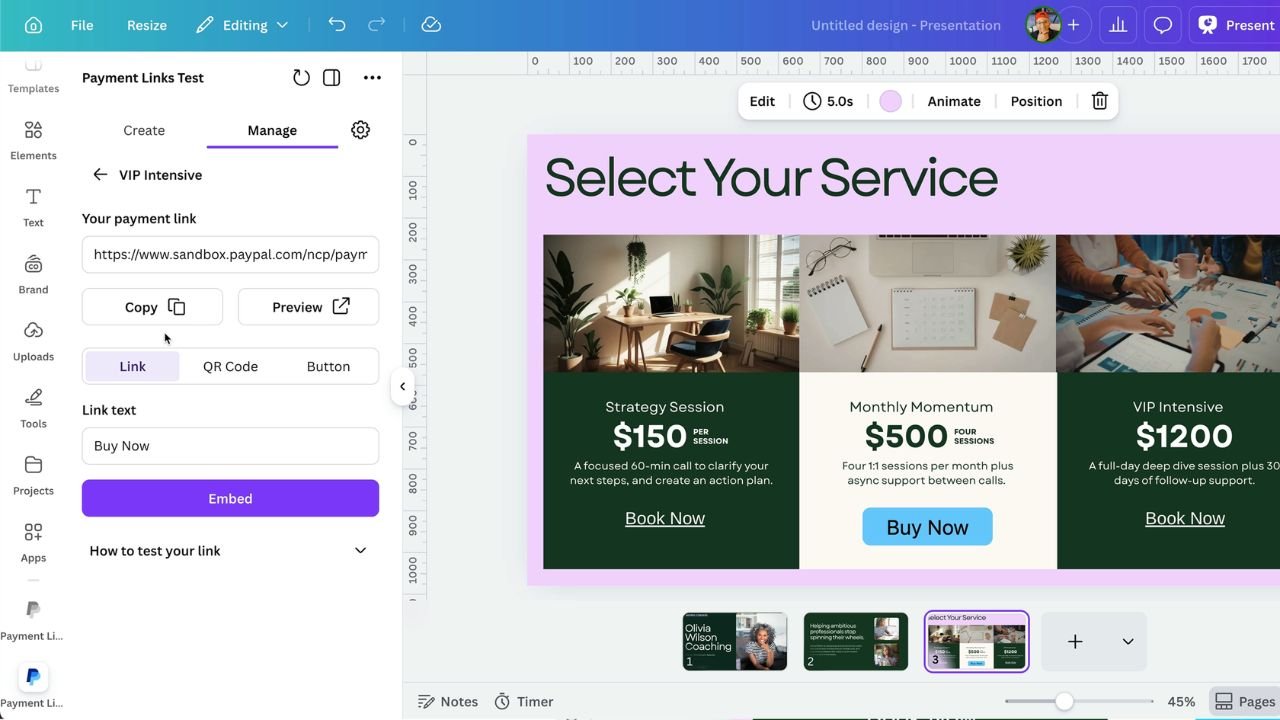
The idea is straightforward. PayPal Payment Links can now be generated and embedded directly inside Canva designs. That might be a social post, a flyer, a price list, or a QR code printed and stuck on a counter at a weekend market. The customer scans or clicks, and pays through a PayPal-hosted checkout page.
No separate ecommerce site. No stitching together multiple platforms. And, no sending customers away from the content they just engaged with.
For small and independent operators, that consolidation matters less as a “feature” and more as a reduction in overhead. Most already use Canva as a default design tool for day-to-day business materials. Adding payments into that same workflow removes one of the more awkward handoffs in modern small business operations – the jump from marketing to transaction.
It also reflects how blurred those two things have become.
For many sole traders and small brands, content and commerce now sit in the same place. A product launch might happen through a Canva-designed Instagram post. A service might be booked via a shared PDF. A market stall might rely on a printed QR code rather than a point-of-sale system. The storefront has become fragmented, distributed across whatever channels are easiest to maintain.
The problem is that payments haven’t always kept pace with that shift. They’ve often remained one step removed – handled through external platforms or separate checkout systems that sit outside the content itself.
The new integration tries to close that gap by letting the transaction sit closer to the moment of intent. A viewer doesn’t need to leave what they’re looking at to complete a purchase. The design becomes the point of sale.
From PayPal’s perspective, the move also extends its role beyond traditional checkout pages into the broader content ecosystem where small business activity increasingly happens. The company’s pitch is less about replacing existing tools and more about reducing the number of them needed to complete a simple transaction.
There are practical implications for operators too. Fewer platforms to manage means fewer subscriptions, fewer integrations to maintain, and fewer points where something can break. It also simplifies the customer experience – often where small businesses either convert interest into sales or lose it.
The timing isn’t accidental. Social commerce continues to grow, and more buying decisions are being made inside feeds, messages and communities rather than on standalone websites. The infrastructure around those behaviours is still catching up.
What this partnership does, in a very specific way, is acknowledge where a lot of small business activity already lives – and removes a small but persistent layer of friction from it.