While some success stories often come stamped with city skylines and startup hubs, Kristie Ivone’s win feels refreshingly different.
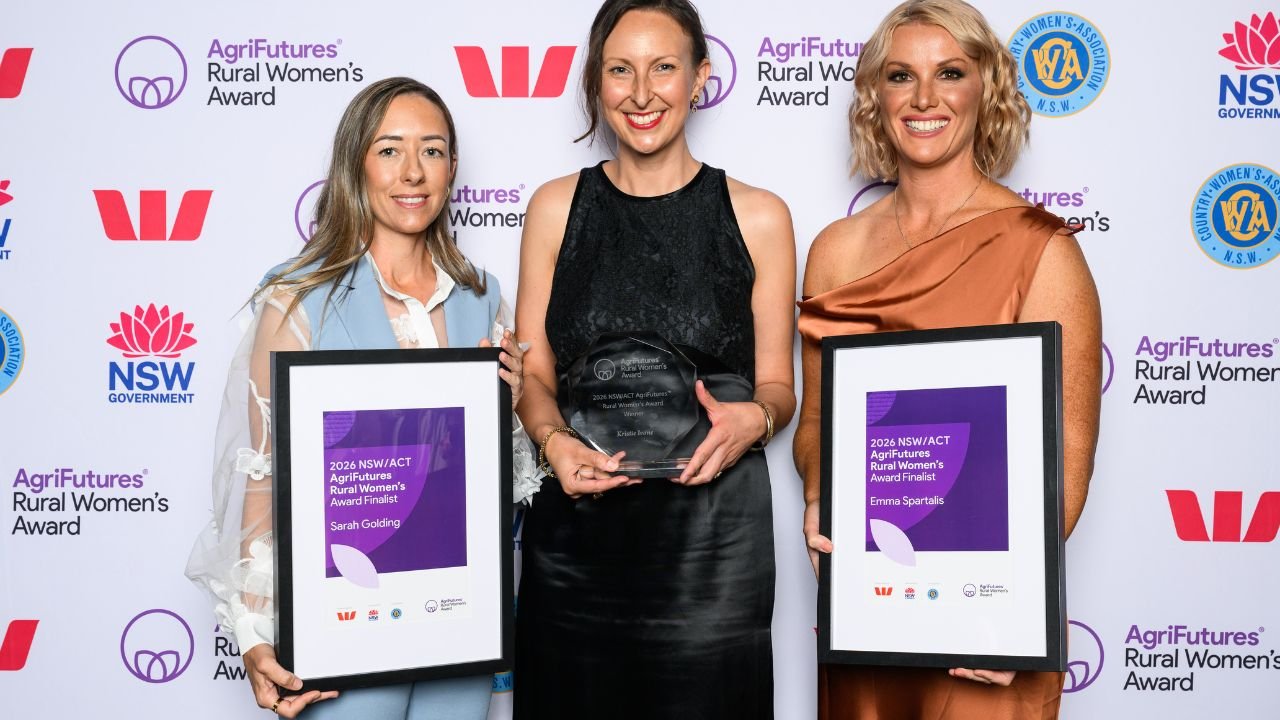
The Boas Language Academyfounder (pictured centre), who built the Albury Wodonga-based social enterprise, has just claimed the prestigious 2026 NSW/ACT AgriFutures Rural Women’s Award.
And Kristie’s story proves that some of the most powerful ideas are born far from the boardroom.
At the heart of Boas Language Academy is a simple but transformative belief: language should never divide people – it should connect them.
Founded in 2024, the academy works with migrants living in regional communities, helping them become teachers of the languages they already speak. Adults and children then enrol in immersive classes that offer both language learning and cultural exchange.
It is a smart model, but more importantly, it is a human one.
Rather than viewing language differences as a hurdle, Kristie recognised untapped talent, valuable skills and an opportunity to strengthen the social fabric of regional Australia.
Since launching, Boas has worked with eight migrant teachers – seven of them women – and reached more than 60 students through courses in Arabic, English, French, Italian and Spanish.
Behind those figures, stories reveal restored confidence, create employment pathways and strengthen communities.
Kristie grew up on a beef cattle farm in Whorouly, Victoria, before moving to Albury Wodonga eight years ago. With qualifications in international relations and regional development, she understood both the promise and pressures of life outside metropolitan centres.
Regional communities often face workforce shortages, skills gaps and fewer specialist services. Migrants settling in these areas can also encounter barriers when it comes to employment, connection and belonging.
Kristie’s response was not to build another support service. She built opportunity.
By training migrants to become educators, Boas creates income pathways, local engagement and professional confidence at once. It also gives long-term residents the chance to connect with new cultures in a way that feels joyful, practical and immediate.
That kind of thinking is exactly why the AgriFutures Rural Women’s Award continues to matter. It shines a light on women solving complex local issues with creativity and grit – often without the visibility or resources afforded to larger city-based ventures.
Minister for Agriculture and Regional New South Wales Tara Moriarty praised Kristie’s work, saying Boas is strengthening Albury Wodonga by creating opportunities for migrants to share their skills and build community connections that benefit the whole region.
Minister for Women Jodie Harrison described Boas as a powerful example of women-led innovation responding to local needs, noting that it supports workforce participation while strengthening social cohesion.
AgriFutures Australia Managing Director Brianna Casey AM added that Kristie’s work shows how cultural inclusion transforms individuals and strengthens communities people proudly call home.
And perhaps that is the real story here.
Too often, women’s leadership is spoken about in broad terms – resilience, purpose, vision. Kristie’s success shows what those words look like in practice. It looks like women stepping into teaching roles. It looks like classrooms full of curious children learning new words. And, it looks like regional towns becoming more welcoming, dynamic and future-ready.
There is another deeply personal layer to Kristie’s story, too.
She is a cancer survivor and an advocate for banning genetic discrimination, while also calling for better access to health services in regional areas. It speaks to a pattern in her work: identifying barriers, then refusing to accept them as permanent.
Winning the state title comes with a $15,000 grant from Westpac, alongside professional development opportunities and access to alumni networks that can help scale her impact.
She will now represent New South Wales at the national AgriFutures Rural Women’s Award Gala Dinner at Australian Parliament House in Canberra on 8 September 2026, where the national winner will receive a further $20,000 grant and the runner-up an additional $15,000.
Yet Boas is already thinking beyond awards season.
Over the next 12 months, the organisation plans to double its teacher and student numbers, expand its language offerings and respond to growing waitlists for Swahili, Hindi, German and Japanese.
It is also working with Deakin University to co-design an in-house teacher training framework, due to launch in 2026, which will support larger cohorts of migrant teachers into professional skills development and local employment.
It is ambitious growth, but the strongest ideas often deserve to grow.
Kristie Ivone’s rise is a reminder that innovation does not always come dressed as technology or disruption. Sometimes it arrives as belonging. Sometimes it sounds like conversation. And, sometimes it begins with one woman deciding that barriers can become bridges.
And sometimes the future of regional Australia is spoken in many languages at once.