It’s ironic to think that the most important fitness metric isn’t on your smartwatch. Stranger still, that’s not an argument for ditching it. However, according to Peloton instructor, certified running coach and wellness advocate Joslyn Thompson Rule, the two ideas can sit together just fine once you unpack them.
Somewhere between the step count, the heart rate zones, the sleep score and the recovery percentage, it’s easy to lose the plot on why you started tracking any of it in the first place. Wearables promise clarity, but for a lot of people they’ve quietly become one more thing to feel behind on before breakfast.
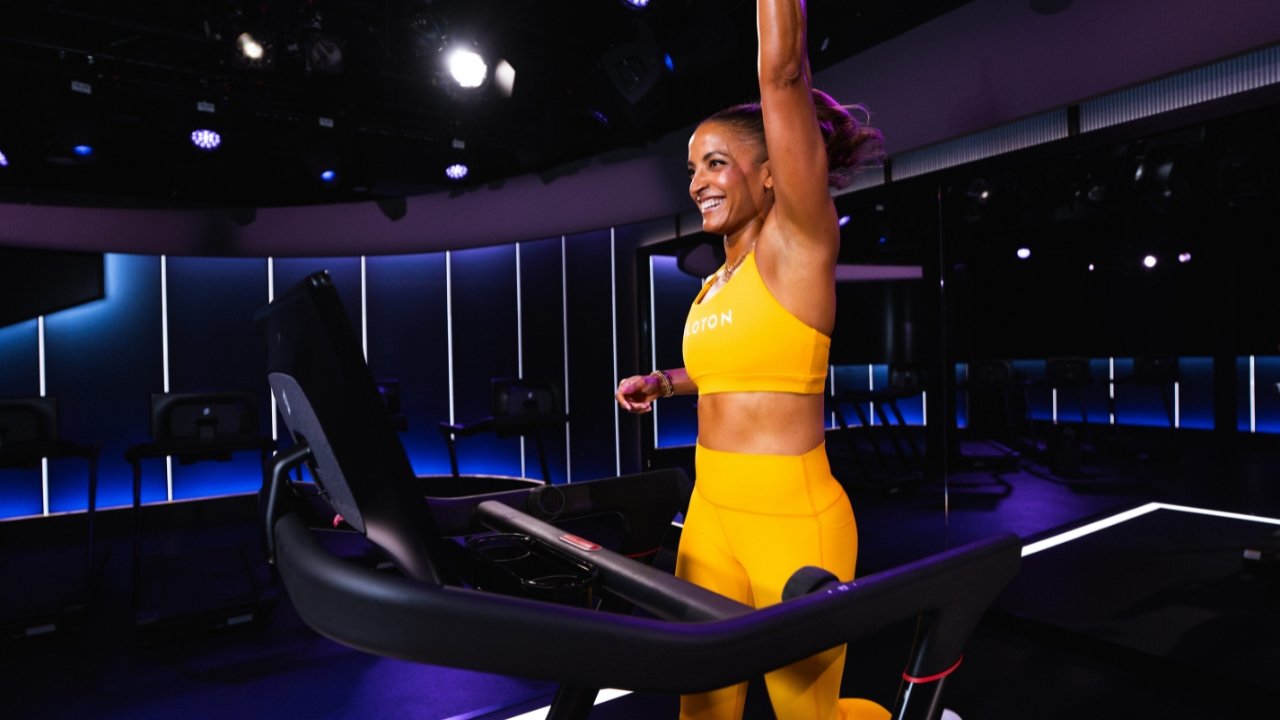
Here, Thompson Rule (main image) talks about what fitness data is actually good for, where it goes wrong, and how to build a relationship with your metrics that doesn’t quietly override your own body.
The Actual Upside of All This Tracking
Before getting into where data trips people up, Thompson Rule is clear that the benefits are real – particularly when it comes to progress you’d otherwise miss.
“I think one of the biggest benefits is being able to track progress over time,” she says. “Whether you’re running, strength training or focusing on recovery, data gives you a useful reference point. It allows you to look back and say, ‘Actually, I ran further than I did a few weeks ago,’ or ‘I’m lifting more weight than I was last month.'”
It’s a pattern she sees constantly through Peloton’s community. “Used well, fitness data can help people recognise progress that might otherwise go unnoticed… Progress isn’t always something we feel day to day, but over time those small improvements can add up to something really meaningful.”
Not All Metrics Deserve Your Attention
With steps, heart rate, sleep and recovery all competing for space on one screen, the instinct is often to track everything. Thompson Rule’s advice is the opposite.
“The most useful data is the data that helps you move forward,” she explains. “You might already be great at staying hydrated, so tracking that may not add much value for you. But perhaps a proper cool down is the thing that consistently slips down your priority list, or you notice you’re regularly missing sleep. That’s where data can become helpful.”
Her rule of thumb: “I always encourage people to focus on the metrics that support the habit they’re trying to build, rather than tracking everything simply because it’s available. More data isn’t necessarily better. The question is always: ‘What information is genuinely useful for me right now?'”
When the Number Starts Outranking How You Feel
This is where Thompson Rule gets most direct. Asked whether there’s a danger in fixating on individual scores rather than the bigger picture, her answer is immediate: “Absolutely.”
“The biggest risk is that we can start prioritising the data over our own experience,” she says. “If a number on a screen begins to matter more than how you’re actually feeling, the data has stopped being useful.”
For her, that’s the whole crux of the relationship: “Technology should support communication with your body, not replace it. Fitness is ultimately a human experience. The data is one part of the picture, but it should never be the entire conversation.”
The Real Test: Bad Recovery Score, Great Morning
It’s a scenario most wearable-wearers know well – the watch says recovery is poor, but you woke up feeling genuinely good. So who wins?
“I’d still start with how I feel,” Thompson Rule says. “The data might encourage me to pay a little more attention as I go through the day or my workout, but I wouldn’t automatically change my plans based solely on a score.” The reverse holds too: “If my watch says I’m fully recovered but I wake up exhausted, I’m going to listen to my body. For me, the data is information, not instruction.”
It’s a distinction she returns to throughout – data as one voice in the room, not the deciding one. “I always start with the same question: ‘How do I feel?’ That’s the foundation. Then I can use the data as an additional source of information… I don’t think it should ever replace your own body awareness.”
Where Data Actually Builds Body Awareness
None of this means Thompson Rule is anti-tech. Used the right way, she says data can genuinely sharpen your sense of your own body rather than dull it – and she has her own example.
“One example for me is hydration,” she says. “My watch tracks my sleep and recovery, and over time I noticed that certain recovery metrics weren’t as strong when I hadn’t drank enough water throughout the day. That awareness helped me establish a better rhythm around hydration. In that sense, the technology didn’t replace my body awareness, it enhanced it. It highlighted a pattern that helped me make a more informed decision.”
Her takeaway: “That’s where technology is at its best. It helps us notice patterns and build healthier rhythms.”
Overwhelmed by Your Own Data? Pick One Thing
For anyone drowning in tabs, scores and graphs, Thompson Rule’s advice is refreshingly simple.
“I would encourage them to choose one thing,” she says. “Identify the area that’s going to make the biggest difference to your health or performance right now and focus there. Maybe it’s sleep, maybe it’s stretching, maybe it’s hydration. There’s no prize for tracking everything. Use the information that helps you build better habits and ignore the rest. More isn’t always more.”
The Real Definition of a “Smart” Relationship With Data
So what does it actually mean to use fitness data well? For Thompson Rule, it circles back to something no wearable can measure directly.
“Having a smart relationship with fitness data means having an even smarter relationship with your body,” she says. “Technology can provide useful information, identify patterns and support progress, but it should never replace trust in yourself. The goal isn’t to hand over decision-making to a device. The goal is to use the information available to make more informed decisions.”
And there’s more to the picture than the numbers suggest. “Fitness is also about more than numbers. Community, connection and enjoyment matter just as much as pace, distance or recovery scores. That’s something I see every day at Peloton.”
Her closing advice, for anyone trying to get smarter about their own data: “Use the data when it’s useful, but always trust your body first. The strongest relationship you’ll ever build in fitness is the one you have with yourself.”