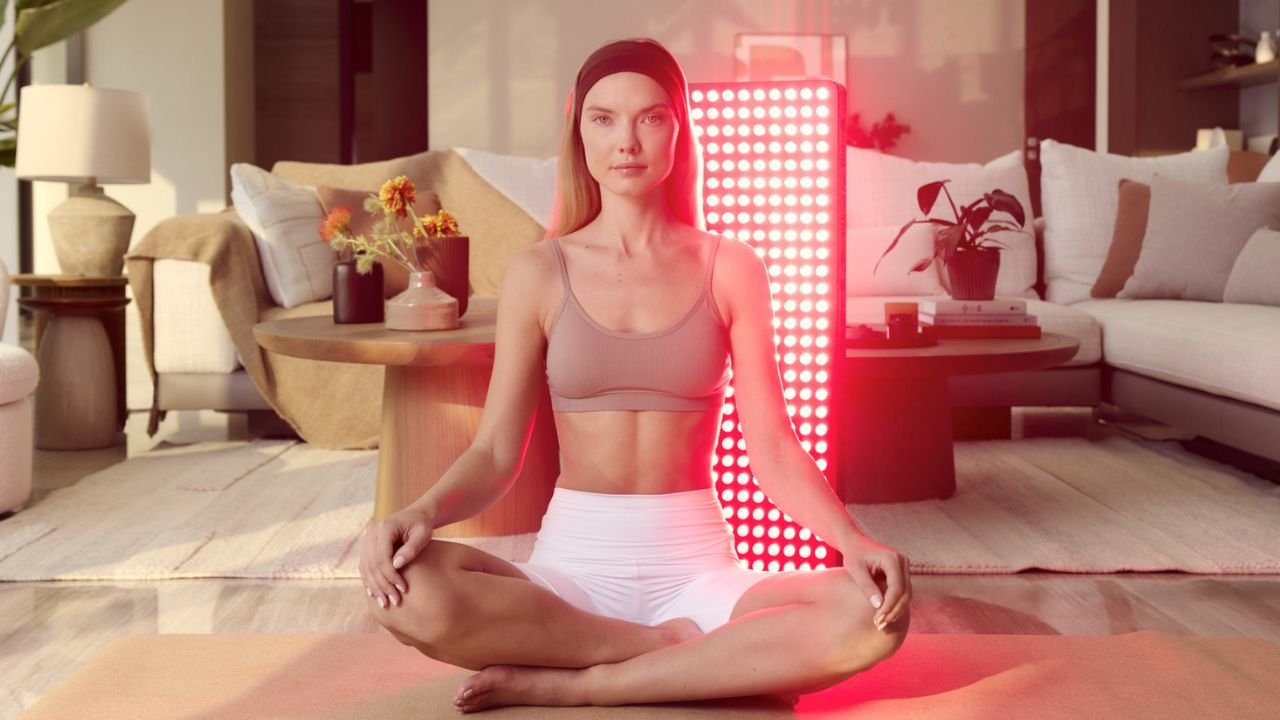
If your For You page has looked like a low-key sci-fi film lately – think glowing red face masks, panels propped up in bathrooms, the odd celebrity bathing in what looks like a very flattering crimson glow – you’re not imagining things. Red light therapy has officially gone from biohacker fringe to bathroom shelf staple, and the numbers back it up.
New global research from wellness tech brand Bon Charge, surveying 7,000 adults across the US, UK, UAE and Australia, has found that red light therapy usage has jumped significantly in the past year alone, with the vast majority of users worldwide having picked up the habit only in the last two years. Translation: this isn’t a niche biohacker fad anymore. It’s mainstream, and it’s moving fast.
So what’s actually going on?
Modern life, if we’re honest, is not exactly kind to our biology. We’re staring at screens from sunrise to well past sunset, spending more time indoors than any generation before us, and generally living in a way our circadian rhythms never signed up for. The report’s central idea is a simple but compelling one: rather than relying on willpower alone to fix our sleep, energy and skin, more of us are turning to technology that restores the natural biological signals modern life has quietly stripped away.
Enter red light therapy, blue light blocking glasses, infrared saunas and PEMF (pulsed electromagnetic field) devices – the fantastic four of the wellness tech world right now.
The glow-up is real
Here’s where it gets interesting for anyone who’s dabbled in a red light mask mid-Netflix session: skin has overtaken recovery as the number one reason people reach for red light devices. Across the UK, Australia and the UAE, aesthetic goals now outrank muscle recovery as the leading motivator, and the humble LED face mask has become the most popular red light product in every region surveyed. Improved skin appearance is the single most-reported benefit globally, followed closely by that coveted “younger-looking skin” glow, with relaxed muscles, better sleep and improved stress resilience rounding out the top five.
Basically, what started as a recovery tool for athletes has quietly rebranded itself as a beauty essential. And we are here for it.
Where in the world is everyone glowing?
Adoption varies wildly depending on where you live. The UAE is leading the charge globally, with 61 per cent of adults having tried red light therapy and 57 per cent having used blue light blocking devices – figures well above the global average. Celebrity and influencer endorsement plays a huge role there, with almost half of UAE red light users saying they tried it after seeing it online.
Australia and the US, meanwhile, are seeing men lead the adoption charge more than women – the exception being the UK, where slightly more women than men have tried red light therapy (27 per cent versus 24 per cent). And across the board, it’s under-35s driving the trend, treating wellness tech less like a luxury indulgence and more like a normal part of getting ready in the morning.
The trust factor
Here’s the bit worth paying attention to if you’re wellness-tech-curious but a little skeptical: more than half of adults across all four markets surveyed say they simply don’t trust wellness technology without scientific backing. That distrust of “wellness for wellness’s sake” is arguably shaping the whole category, pushing brands to lean harder into the actual mechanisms behind their devices rather than vague promises of a “glow.”
According to the report’s scientific advisors, that mechanism – at least for red and near-infrared light – largely comes down to mitochondria, the energy factories inside our cells. The theory is that certain wavelengths may support how efficiently those mitochondria produce usable energy, which in turn may help cells function and recover more effectively. It’s still an evolving area of research, but it’s a far cry from the “trust me, it just works” energy the wellness world was running on a few years ago.
Should you actually try it?
If you’ve been on the fence about adding a red light gadget to your routine, you’re clearly in good company. Global data suggests the vast majority of people using this stuff started within the last two years, meaning most of us are still relative beginners. Whether your motivation is glowier skin, better sleep, or just joining in on what your under-35 peers are clearly already doing, the appeal seems to boil down to one thing: low effort, high reward rituals that fit into a life that’s already full.
A word of common sense, though: none of this is about swapping your skincare routine or your training program wholesale for a glowing panel. Think of it as an add-on, not a replacement – a few minutes here and there layered into a routine you already have, rather than a silver bullet. The brands doing this well are the ones being upfront about how their tech actually works, not just how good it looks in a mirror selfie.
Modern life may disrupt our biology in a hundred small ways every day. But if the numbers are anything to go by, more of us than ever are trying to switch the lights back on. Quite literally.