There was a time when buying a robot vacuum felt oddly futuristic. Now? Apparently, it’s just the gateway drug – with Chinese tech giant Dreame Technology recently rolling into Melbourne and casually unveiling more than 80 products across 13 categories at its “All in One Dreame” showcase event.
To paraphrase the official event memo: “Why stop at vacuuming your floors when you could also style your hair, cool your living room, purify your air and maybe eventually sell you a car?”
The brand, which most Australians probably know as “that robotic vacuum company your extremely organised friend won’t stop talking about,” is clearly trying to evolve into something much bigger: a fully-fledged lifestyle tech ecosystem with products touching nearly every corner of modern life.
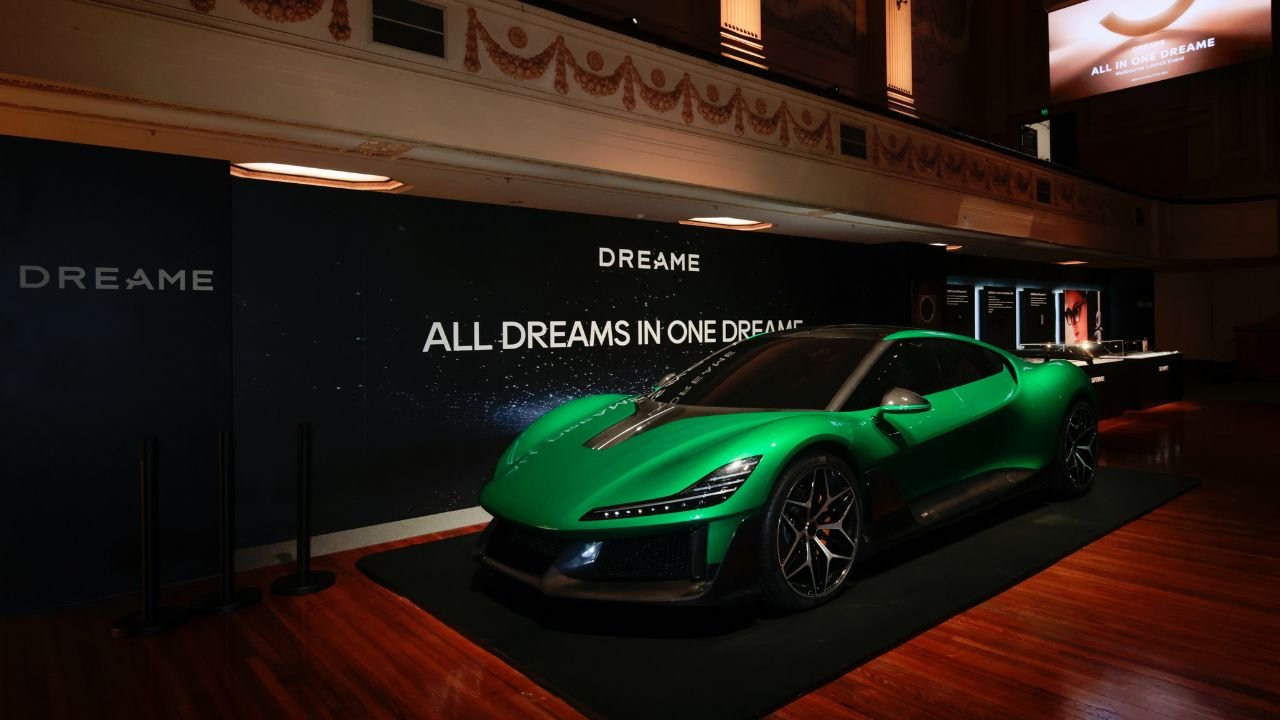
We’re talking robotic vacuums, wet-and-dry cleaners, hair styling tools, air purifiers, smart rings, refrigerators, TVs, AI glasses and even a luxury smartphone concept. Oh – and a concept electric car because apparently 2026 is the year tech brands decided subtlety was overrated.
Held inside Melbourne Town Hall, the event felt less like a product launch and more like someone opened a portal into the near future and dumped the contents into one very shiny room.
But while the concept car and luxury smartphone naturally grabbed attention, the real sleeper hit of the evening was something far more relatable: beauty tech.
Because somewhere between the AI wellness ring and the futuristic mobility announcements, Dreame quietly revealed what could become its biggest mainstream flex yet – premium-looking personal care tools that don’t require you to emotionally recover after checking your bank balance.
And frankly, the timing makes sense.
Consumers of the $12 a dozen eggs era, now occupy an awkward middle ground: they still want products that look sleek, feel luxurious and perform well – but they don’t necessarily want to spend four figures to achieve a salon blowout in their own bathroom.
That’s where Dreame seems to be positioning itself: accessible luxury tech. Not bargain-bin gadgets pretending to be premium, but genuinely design-forward devices that prioritise innovation and functionality without the intimidating price tags traditionally attached to high-end beauty tools.
The personal care lineup showcased exactly that energy.
The upcoming AirStyle Era – an 8-in-1 styling system designed for drying, curling, straightening and volumising – looks poised to become one of the brand’s headline products. Alongside it sat the Pilot Smart AI Hair Dryer, Aero Straight Pro and Gusto High-Speed Hair Dryer, all leaning heavily into the idea that beauty routines are becoming increasingly tech-driven.
While the overlap between beauty consumers and gadget lovers has never been stronger – as hair tools now come with airflow engineering, temperature regulation, AI-powered sensors and enough aerodynamic terminology to sound vaguely capable of launching into orbit – the difference is that brands like Dreame appear to understand something important: consumers still want performance, but they also want accessibility.
That “premium features without the premium price tag” positioning feels especially relevant at a time when people are becoming more selective about where they splurge. Consumers still crave luxury aesthetics – they’ve just become more strategic about how they spend.
Of course, Dreame didn’t abandon the category that made it famous.
The new X60 Ultra robotic vacuum led the showcase with its ultra-slim 7.95cm design and Proactive Light technology designed to tackle hard-to-reach spaces. The company also expanded its floorcare range with the X3 Station stick vacuum alongside the T16 Pro Triforce and T16 AE wet-and-dry vacuum systems.
In other words: your floors remain under surveillance.
But the broader message of the event was impossible to miss. Dreame no longer wants to live inside one category. It wants to become one of those brands that quietly infiltrates every aspect of your life until you suddenly realise your vacuum, hair dryer, air purifier and smart ring all carry the same logo.
It was a level of ambition extended well beyond cleaning and beauty. And one that we can respect.
The company previewed the FizzFresh refrigerator range complete with a built-in sparkling water system – arguably the most aggressively “I have my life together” appliance imaginable – alongside the X-Wind 51 Air Conditioner with dual-arm airflow technology.
There was also the AI Dual Inverter Washer & Dryer Set L9, the FP10 Air Purifier, the MF10 Bladeless Fan and the S100 television series entering the home entertainment space.
Meanwhile, the upcoming Dreame AI Smart ECG Ring signalled the brand’s move into wellness wearables, promising health tracking and connected intelligence in a market that increasingly treats biometric data like a personality trait.
Then came the real “wait… what?” moment.
Dreame unveiled the AURORA LUX luxury smartphone and the Nebula NEXT 01 JET Edition concept car – two vision pieces intended to showcase the brand’s future ecosystem aims rather than immediate retail launches in Australia and New Zealand.
Still, their presence said a lot.
Tech companies today aren’t just competing over products anymore; they’re competing over ecosystems. The goal isn’t simply to sell you one device. It’s to create an interconnected lifestyle where everything talks to everything else and your entire home starts feeling vaguely sentient.
Dreame seems determined to enter that conversation.
Whether Australian consumers are ready to buy a car from the same brand that cleans under their couch remains to be seen, but stranger things have happened in tech. After all, we once thought phones with no physical keyboards looked ridiculous.
Now we panic when someone calls instead of texts.
Dreame’s expansion is particularly interesting because it arrives at a moment when consumers increasingly seek brands that deliver premium aesthetics and high-performing functionality without attaching impossible luxury markups.
And while comparisons within beauty tech and smart home categories are inevitable, Dreame’s biggest advantage may actually be its ability to position itself as innovation-led first – not simply as a cheaper alternative to someone else.
The result was a tech showcase that somehow managed to include robotic vacuums, AI wellness rings, hairstyling systems and an electric concept car without completely collapsing under the weight of its own expecatations.
Honestly, in this economy, being able to buy your future hair routine and potentially your future vehicle from the same ecosystem feels efficient.