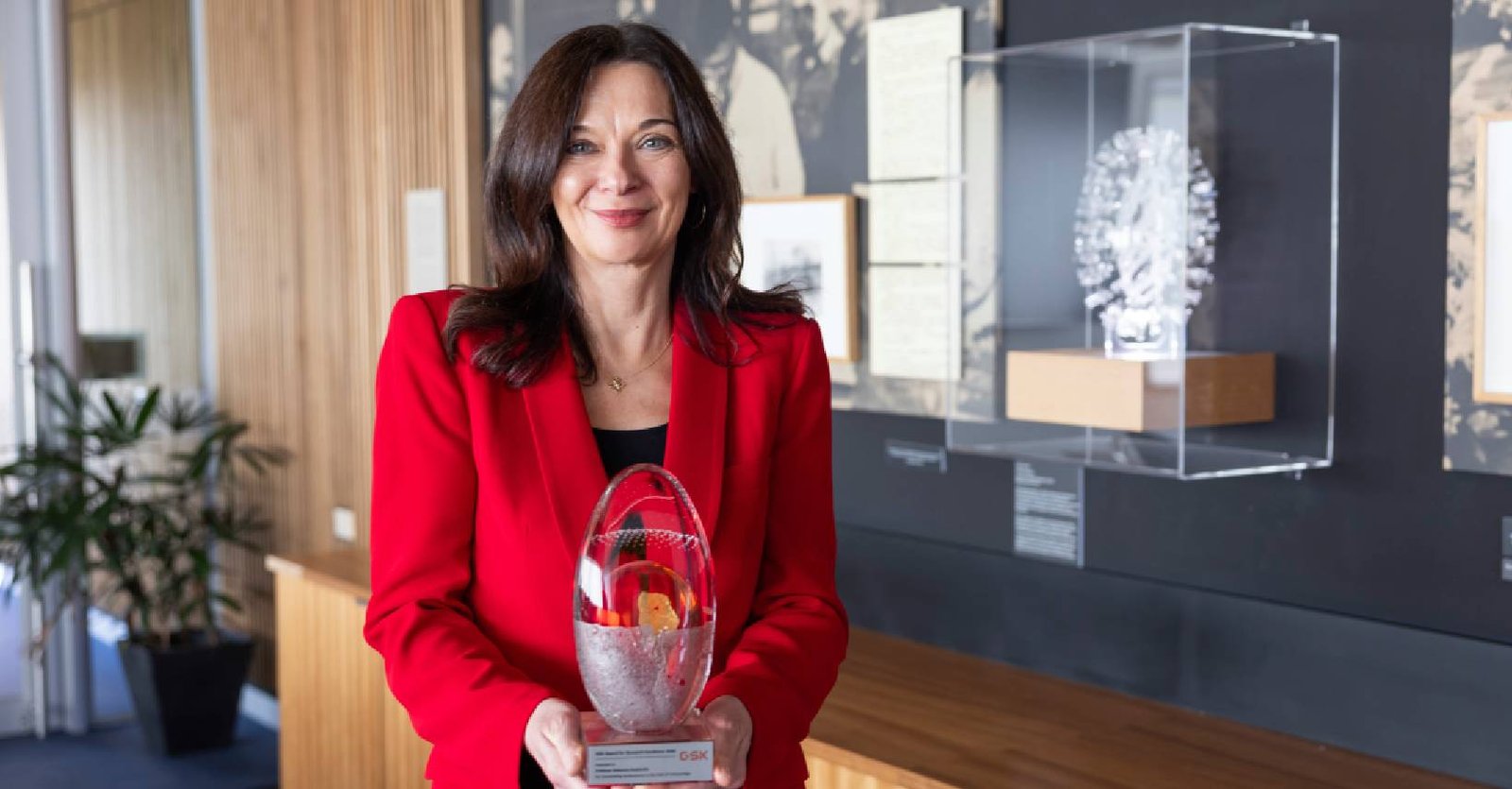
Professor Katherine Kedzierska has spent 20 years chasing one question. Her answer, a single gene called OLAH, has just won her the 2026 GSK Award for Research Excellence — and could change how hospitals treat every patient who walks in with a respiratory virus.
Two people catch the same flu. One is back at work in a week. The other ends up in intensive care.
For two decades, Professor Katherine Kedzierska has been asking why — and now she has an answer that could save lives.
The University of Melbourne immunologist and laboratory head at the Peter Doherty Institute for Infection and Immunity has been named the winner of the 2026 GSK Award for Research Excellence, one of Australia’s most prestigious independent medical research prizes, for identifying the gene that drives life-threatening inflammation in severe cases of influenza, COVID-19 and RSV.
“When I began my career, I simply wanted to understand how the immune system protects us from disease,” Professor Kedzierska said as she accepted the award. “I never imagined that question would take me through the 2009 H1N1 influenza pandemic or COVID-19.
“It is an incredible honour to receive the 2026 GSK Award for Research Excellence. This recognition reflects the dedication of an extraordinary team of researchers and collaborators whom I have had the pleasure of working alongside over many years.”
The gene that tips the balance
The breakthrough centres on OLAH. While studying patients hospitalised with avian flu, Professor Kedzierska’s team noticed unusually high activity of the gene in those who became critically ill. Years later, the same pattern turned up in severe COVID-19 — and then again in RSV.
That consistency matters. It suggests OLAH may be a common pathway underlying severe disease across multiple respiratory viruses, rather than a quirk of any one of them.
“Respiratory infections are often a race between the virus and our immune system,” Professor Kedzierska said. “Our goal is to better understand why that balance tips towards severe disease in some people, so we can identify those at greatest risk earlier and ultimately develop therapies that prevent the immune response from causing further harm.
“This award and accompanying grant will help us take the next step by advancing research into new ways of predicting severe disease and evaluating potential therapies that could improve outcomes for patients.”
From the bedside to the lab
Professor Jason Trubiano, infectious diseases physician and Head of Infectious Diseases at the Doherty Institute, says the power of the research lies in how tightly it connects clinical care with scientific discovery.
“When a patient comes into hospital with a respiratory infection, one of the biggest challenges is understanding who may go on to become seriously unwell,” Professor Trubiano said. “Katherine’s research is helping us get closer to answering that question by connecting what we see in patients at the bedside with what is driving the immune response.
“In the longer term, this research has the potential to guide more targeted approaches to treatment and prevention for those at higher risk. Katherine is an exceptional collaborator who keeps patients at the centre of her work, and this recognition is incredibly well deserved.”
Why it matters now
The stakes are not abstract. As of August 2026, more than 240,000 national notifications and over 4,500 hospitalisations from flu, RSV and COVID-19 have been recorded across Australia this year, with severe disease hitting young children and older adults hardest. Add growing concern about emerging threats such as avian flu, and the need to predict who will deteriorate — before they do — has never been more urgent.
Yet despite decades of medical advances, clinicians still have few tools to make that call. Professor Kedzierska’s interest in the problem sharpened during the 2009 H1N1 pandemic, which showed in stark terms how differently people can respond to the very same infection.
What comes next
The $150,000 grant attached to the award will fund the next phase: developing and validating a rapid blood test that could flag high-risk patients the moment they arrive at hospital, alongside laboratory testing of therapeutic candidates designed to interrupt the harmful inflammatory response driven by OLAH before it becomes life-threatening.
Dr Alan Paul, Executive Country Medical Director at GSK Australia, presented the award.
“I am delighted to see Professor Kedzierska recognised with the 2026 GSK Award for Research Excellence,” Dr Paul said. “Her dedication to understanding one of the biggest challenges in infectious diseases has the potential to transform the way clinicians predict and manage severe respiratory illness.
“For 46 years, the GSK Award for Research Excellence has celebrated Australian researchers whose discoveries have advanced medicine and improved patient care. Professor Kedzierska’s work is a powerful example of that legacy, and we are proud to support the next phase of her research.”
A National Health and Medical Research Council Leadership Fellow, Distinguished Professor at the University of Melbourne and recently elected Fellow of the Australian Academy of Science, Professor Kedzierska joins a roll call of Australia’s most distinguished scientists to have received the award, including Professor Georgina Long AO and the late Professor Richard Scolyer AO (2018), Professor Brendan Crabb AC (2019), Professor Mark Febbraio (2020), Professor Jamie Cooper AO and the late Professor Rinaldo Bellomo AO (2021), Professor Georgia Chenevix-Trench AC (2022), Professor David Komander (2023), Professor Matthew Kiernan AO (2024) and Professor Edward Holmes (2025).
Image: Professor Katherine Kedzierska with the 2026 GSK Award for Research Excellence. Credit: GSK Australia