

Yasmin London talks about why the future of AI needs more women.
There’s a lot of conversation about getting more women to use AI, learn AI and feel confident with AI. All of that matters, but after spending years working across technology, safety and with young people, I’ve become increasingly interested in a different question: who gets to shape what this technology becomes?
Because once you start looking closely, there’s a gap that’s very difficult to unsee.
Women are disproportionately exposed to some of the changes AI is bringing to work, while remaining underrepresented in the industries and roles building it. International Labour Organization research found female-dominated occupations are almost twice as likely to be exposed to generative AI as male-dominated occupations, largely because women are concentrated in clerical, administrative and support roles.
But that is only one part of the gap.
We’re also seeing what happens when existing inequalities become embedded in technology. Research has found AI reproducing gender and age stereotypes in employment, including generating résumés that portrayed women as younger and less experienced than men. We’ve seen recommendation algorithms amplify misogynistic content to young people, with one study finding the amount of misogynistic content served to experimental TikTok accounts increased fourfold in just five days.
Then there’s what happens to women’s voices online. Australia’s eSafety Commissioner found one in three women surveyed had experienced online abuse in a work context. Nearly a quarter of those who experienced abuse were reluctant to move into leadership positions requiring a public or media presence, with women reporting concerns not only for themselves, but for the safety of their families.
Technology isn’t just changing women’s jobs or what appears on our screens. It can influence who gets opportunities, whose ideas are amplified, who feels safe enough to speak publicly, and who gets to participate in shaping our future.
Once I saw those things together, I couldn’t unsee them. Women are more exposed to what technology changes, while still having less influence over what technology becomes.
And I need more women to see that gap too.
You don’t have to work in tech to shape what happens next
Seeing the gap doesn’t mean every woman needs to learn to code or become an AI expert. I absolutely want more women building these systems, but influence is much broader than who sits inside an AI company.
If you work in HR and your organisation introduces AI into recruitment, you have a role. If you’re an educator considering AI in a classroom, you have a role. If you’re a manager being asked to automate part of your team’s work, a parent watching the technology shaping what your children see, or simply someone whose work and life are being changed by these systems, you have a role too.
That role starts with being willing to question what is being put in front of you. What problem are we solving? Who benefits? Who carries the risk? What assumptions are embedded in the system? Who might be missing from the data or the decision? Where does human judgement still matter?
You don’t need to understand every line of code to ask a very good question.
We need to protect our ability to question
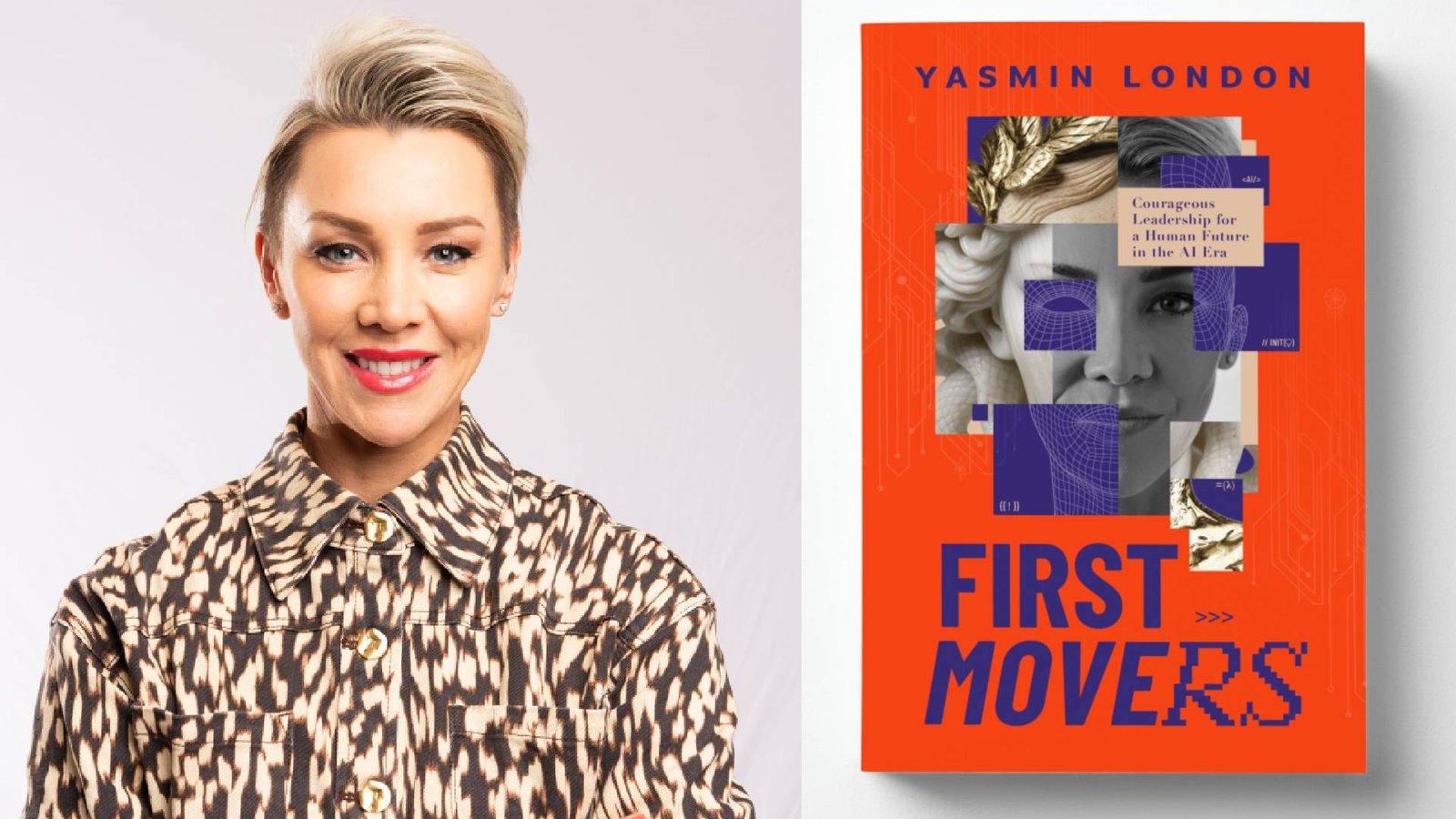
In my book, First Movers: Courageous Leadership for a Human Future in the AI Era, I explore why curiosity, critical thinking and judgement become more important as AI becomes more capable. AI can give us an answer in seconds, but that doesn’t remove our responsibility to decide whether it’s a good answer.
For me, that means making a few deliberate first moves of our own.
Ask what the technology is actually improving.
Is it giving people useful time back, improving access, making someone safer, supporting creativity, or helping us make better decisions? Speed, scale, and efficiency matter, but they’re not the whole measure of progress. We need to measure the human return, too.
Ask who gets the benefit, and who bears the risk.
An organisation might gain productivity or reduce costs, while an employee, customer, student, or community faces the consequences when the technology gets it wrong. The people who benefit from AI and the people exposed to its failures are not always the same.
Protect human judgement. Pay particular attention when AI is being used around employment, education, safety, wellbeing or someone’s future, because these are decisions where context and judgement still matter enormously.
Stay curious enough to challenge yourself. If something doesn’t make sense, ask why. Use that beautiful gift of human intuition. If an AI-generated answer doesn’t feel right, make the time to check it. And if everyone in the room is excited about what a system can do, be the one willing to ask what it should do. Remember that old adage, “Just because we can, doesn’t mean we should.”
I’m optimistic about what AI can make possible, but I don’t want women to simply become better consumers of a future somebody else has decided for us. I want us to help shape it, question its assumptions and demand that technological progress produces a human return through greater safety, opportunity, creativity, access, better decisions and better lives.
I’ve seen the gap now, and I can’t unsee it. I want more women to see it too, because we don’t need to wait until we feel like technology experts before we participate in deciding what kind of technological future we are prepared to accept. Sometimes the first move is having the courage to ask the question nobody else in the room is willing to.
About the author:
Yasmin London is an international keynote speaker, former NSW Police officer and technology leader, and founder and CEO of First Movers Co. Her new book, First Movers: Courageous Leadership for a Human Future in the AI Era, is a brave, bold and personal case for why courage, not confidence, is where real leadership in life and work begins.

