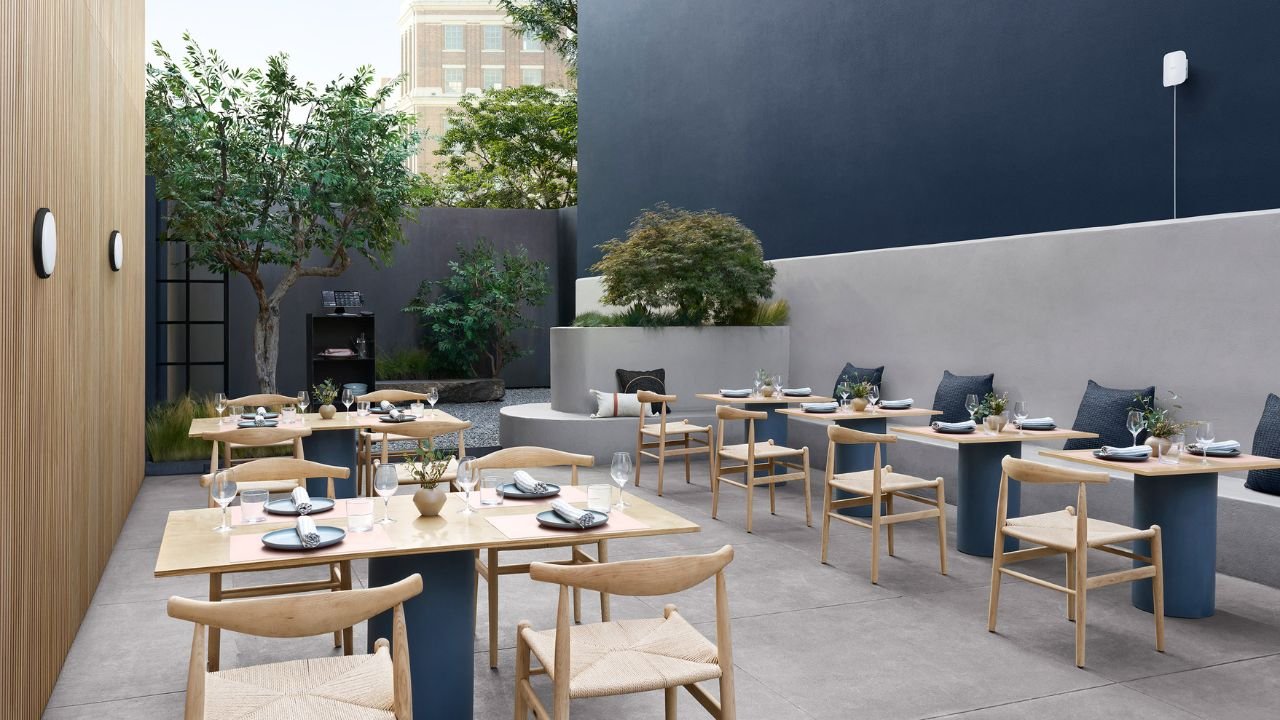
We’ve spent the last decade obsessing over how our homes – or more specifically our backyards – look. The outdoor lounges, the fire pits, the perfectly styled dining tables that would not look out of place in a Martha Stewart magazine. In fact, nearly a third of Australians have upgraded their outdoor spaces in recent years, with many spending upwards of $10,000 turning backyards into something closer to open-air living rooms than, well, backyards.
The only problem? The Wi-Fi didn’t get the memo.
Because while we’ve been busy creating outdoor spaces that rival interiors, connectivity has quietly stayed stuck inside. And it shows. Two-thirds of Australians still deal with home internet issues, and for nearly one in three, reliability is an ongoing frustration. It’s the modern domestic contradiction. We can stream movies on the couch, but step outside and suddenly we’re back in buffering purgatory.
Which is exactly what the Eero Outdoor 7 is about.
At its core, it’s a deceptively simple idea – extend fast, reliable Wi-Fi beyond the walls of your home and into the spaces you’re actually using. Because, truthfully, if you’ve invested in an outdoor dining area, a poolside setup, or even just a decent balcony situation, being forced to hotspot from your phone to watch a recipe on Instagram, it kind of defeats the purpose.
And yet, that’s exactly what’s been happening. A quarter of Australians admit to tethering off their phone due to poor signal outdoors, while others simply give up and head back inside altogether. Half of us, in fact, just abandon the alfresco dream and migrate indoors the moment the connection drops. It’s not dramatic – just quietly disappointing.
What makes this even more obvious is how much life is now happening outside. Around 38% of Australians are actively adding connected tech to outdoor spaces, and almost a quarter are planning further upgrades. We’re working out there, entertaining out there, doom-scrolling out there – everything except, apparently, staying reliably connected out there.
To make the point very literally, Eero recently demonstrated how their mesh system works as a single seamless network – taking over a luxe house in Sydney’s Mosman to host the WLT team. And, moving from indoors to outdoors without a break in connection. No awkward dead zones. No “can you hear me now?” energy. Just one continuous signal across the entire home.

And that’s really the shift here: Wi-Fi is no longer just an inside job.
At the centre of it is the idea that outdoor living has officially outgrown its infrastructure. We’ve built the decks, bought the furniture, installed the heaters for winter evenings – but the digital layer hasn’t kept pace. And in a world where even the barbecue playlist is streamed, that gap is starting to feel very real.
One of the clearest examples comes from how people are already adapting. Instead of fixing the problem, we’ve normalised workarounds: moving closer to the house, switching to mobile data, or just accepting that outdoor Zoom calls are a gamble at best. It’s improvisation, not integration.
That’s where solutions like Eero Outdoor 7 land differently. It’s designed to extend coverage across large outdoor areas – up to roughly 1,390 square metres – support over 100 connected devices, and handle everything from streaming to security systems without dropping out. It’s also built for actual weather conditions, which feels like an underrated requirement until you realise how many “outdoor” tech products don’t love, well, outdoors.
But the bigger story isn’t really specs. It’s behaviour.
Because what this really highlights is how much we’ve blurred the line between inside and outside living. The backyard is no longer a separate zone – it’s an extension of everything else: work, social life, entertainment, even downtime. And when connectivity fails, it breaks that flow in a way that feels disproportionately frustrating.
There’s also something quietly funny about the evolution of it all. We’ve gone from “don’t sit too close to the TV” to “please sit closer to the house so the Wi-Fi works.” Progress, of a sort.
Still, the appeal here is obvious. Not having to think about your connection is the goal. Not troubleshooting nor resetting routers. And certainly not walking your phone around the garden like you’re trying to catch a signal in 2009. Just seamless internet, wherever you are.
It’s the kind of infrastructure upgrade you don’t necessarily notice until you stop noticing the problem – which is usually the sign it’s working.
And maybe that’s the real shift happening here. Outdoor spaces aren’t just about design anymore. They’re about functionality in the broadest sense – light, comfort, climate, and now, connectivity. Because the modern backyard isn’t just somewhere you sit. It’s somewhere you live.
The only question left is why it took so long for the Wi-Fi to realise it too.