If Artificial Intelligence is shaping the future of work, the question isn’t just how we use it. It’s who gets to shape it.
Right now, that question carries weight. Research from job site Indeed shows that 81 per cent of men report using AI tools at work, compared with just 70 per cent of women. It may seem like a small gap, but in an industry moving at lightning speed, those 11 percentage points matter. The gender divide in STEM is even more stark, with women making up less than 16 per cent of the engineering workforce and around 28 per cent of IT roles.
Yet a new initiative at Strathcona Girls Grammar in Melbourne is determined to change that narrative. And is starting not in the workplace, but in the classroom.
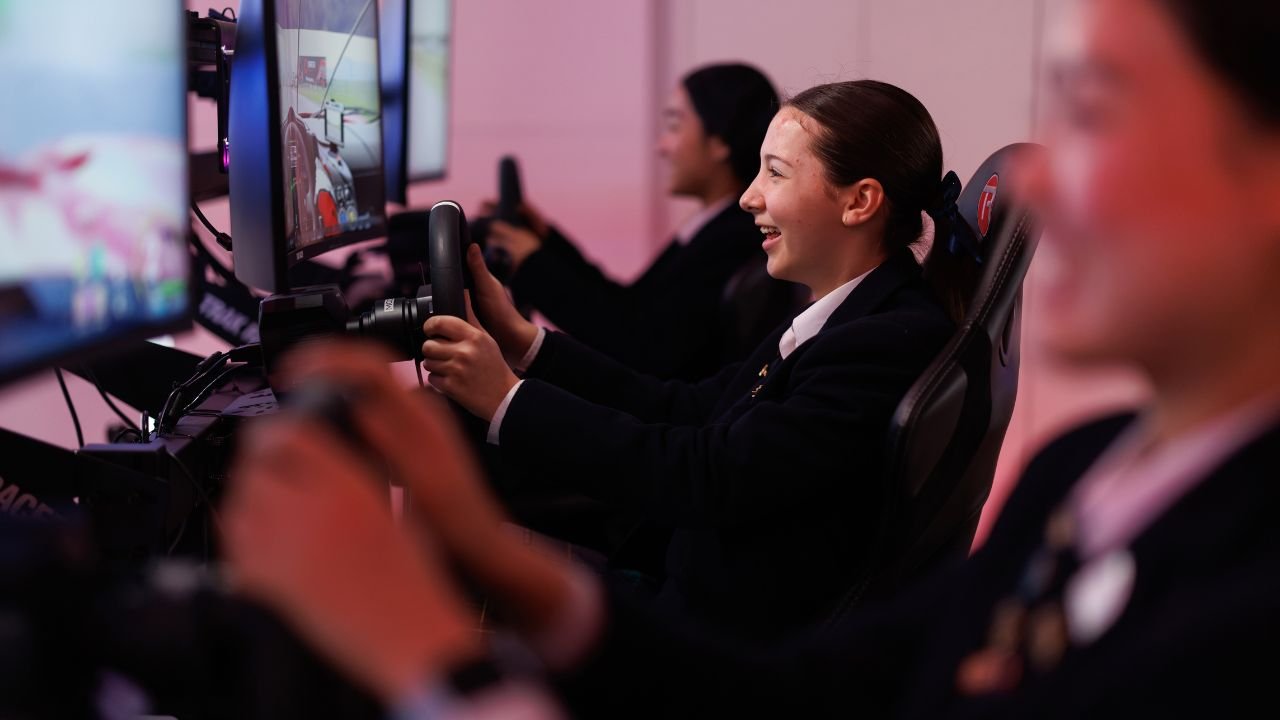
The school has launched the CORAL Lab, a pioneering AI and STEM hub designed to ensure girls don’t simply learn about emerging technology, but help lead it. The lab will allow students from Years 7 to 12 to experiment with coding, robotics, AI-driven game design and student-led app development, while also grappling with the ethical questions that inevitably accompany new technologies.
Motivation behind the initiative runs deep
For Principal Lorna Beegan, the motivation behind the initiative runs deeper than technical skills.
“At Strathcona, we recognise that artificial intelligence is not simply another technological trend, but a force that is defining and redefining this era,” she explains. “As educators, our responsibility extends beyond exploring what new tools can do. We must also consider what they mean for the kind of people our students will become and the futures they will inherit.”
That perspective highlights a crucial truth about technology: innovation doesn’t happen in a vacuum. It reflects the values and assumptions of the people designing it.
“History shows that when women and girls are not at the forefront of significant change, opportunity narrows and inequality can become embedded,” Beegan says. “AI is no exception. If girls are not intentionally positioned to shape its design, ethics and application, conscious and unconscious bias risks being built into the very systems that will influence their lives and careers.”
The CORAL Lab
The CORAL Lab is designed to counter exactly that risk. Rather than encouraging passive consumption of technology, the program is built around curiosity, experimentation and leadership.
“There is no one standalone program. Really, it’s a mindset and a way of thinking – both critically and creatively,” Beegan says. “Our enacted curriculum will help our students find their place in the evolving world of artificial intelligence. And feel empowered to contribute meaningfully to its evolution.”
Inside the lab, students will code, build robots and develop apps. But they will also ask harder questions about the systems they’re creating.
“In the CORAL Lab, students experiment, question, fail forward and lead,” Beegan says. “They move beyond asking, ‘How does this work?’ to consider, ‘Who does this serve?’ and ‘Should this exist?’”
It’s a philosophy that recognises something many technology conversations overlook: the most important skills in the AI age may not be purely technical.
Robotics and Coding
“We intentionally integrate ethics, philosophy and critical inquiry alongside robotics and coding because technology does not operate in isolation,” Beegan explains. “As autonomous and algorithmic systems increasingly influence decision-making, discernment and judgement become as vital as technical capability.”
That balance is reflected throughout the school’s evolving curriculum. Younger students might start with micro:bit coding or building LEGO robots to spark curiosity. Senior students, on the other hand, dive into complex AI applications, VR simulations and data analysis, often tackling real-world problems in hackathons and collaborative projects.
Beyond the hardware and software, the program emphasises what educators increasingly call “future-ready” skills: curiosity, resilience, collaboration and creative problem-solving. Students learn prompt engineering, data literacy and human-AI collaboration alongside subjects like legal studies, economics and history. This helps them understand the broader context and consequences of technology.
Just as importantly, the initiative is grounded in a belief that responsibility must grow alongside innovation.
“It is important for us all to remember that technology may be abstract, but accountability remains human,” Beegan says.
Strathcona Girls Grammar in Melbourne
The school is also working closely with industry partners such as Alyve Technologies and CompNow to ensure students are exposed to the kinds of tools, ideas and career pathways that will define the workforce of the future.
But perhaps the most powerful element of the program is cultural rather than technical. For Beegan, bridging the STEM gender gap begins with confidence and belonging.
“Begin with culture and community,” she says. “When technology is positioned as approachable, collaborative and student-led, confidence follows.”
That philosophy feels particularly timely. As artificial intelligence reshapes industries, education systems around the world are still grappling with how best to teach it.
At Strathcona, the answer is simple: give girls the space, skills and support to lead.
Because if the technologies of tomorrow will shape our lives, the people designing them should reflect the world they serve. And that world needs more women at the table — and at the keyboard