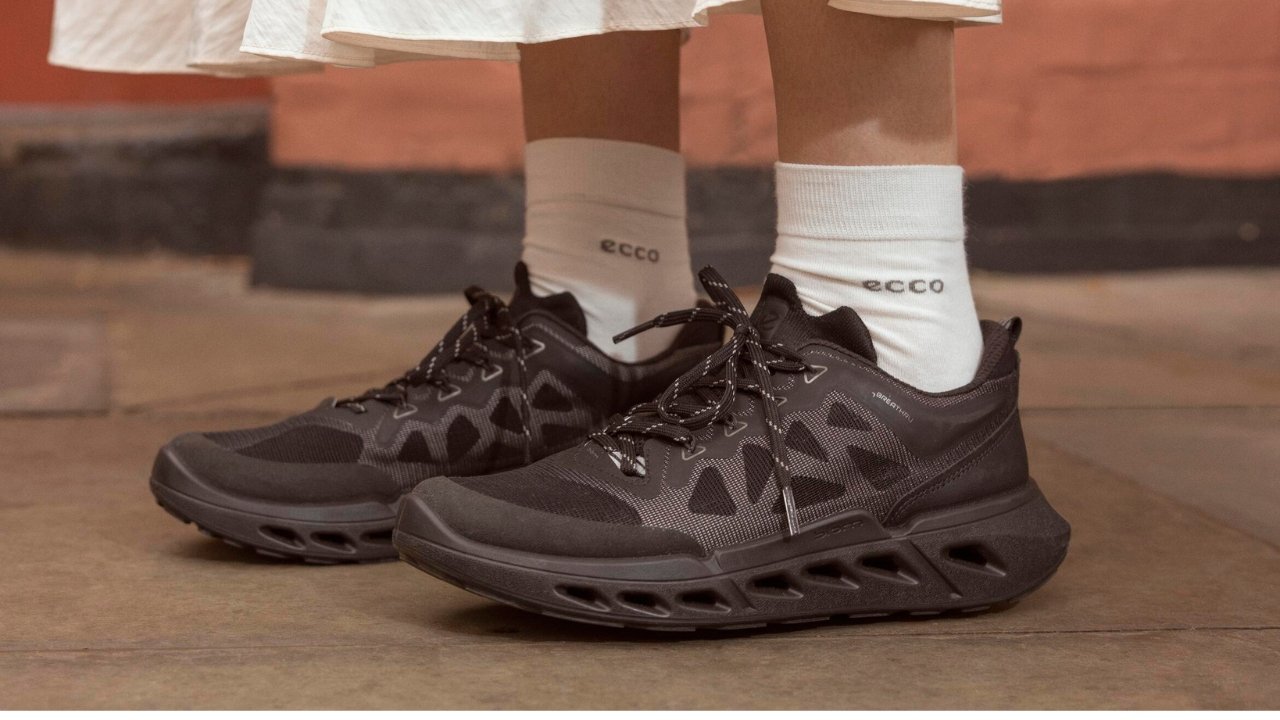
Sneaker design for runners used to be mostly guesswork dressed up as expertise: a last shaped by tradition, a cushioning claim based on foam density, and a size run that assumed every foot in a “9” was roughly the same shape. That’s quietly changing. Footwear brands are increasingly building shoes from measured biomechanical data rather than inherited assumptions – and, Ecco’s Biom 720, happens to be a clean example of where that shift started and how far it’s since travelled.
Why brands got obsessed with feet
The industry’s fit problem is bigger than it looks. Retail research has pointed to gait analysis or foot assessment being available in only a small fraction of stores, which leaves most shoppers buying on size alone – a habit that shows up later as high return rates for ill-fitting shoes, especially online. In response, foot-data infrastructure has scaled fast: fitting-tech companies have built databases running into the millions of 3D foot scans, used to map regional and sex-specific differences in foot shape that generic sizing charts miss entirely. The same data increasingly feeds product development itself, not just fit – brands now use foot scans and plantar-pressure mapping to inform arch support, pronation control and midsole geometry before they even prototype a shoe.
From lab data to sole shape
Running deeper into the shoe, the same logic is playing out in materials and structure. Researchers have used pressure sensors, motion capture and finite-element modelling to work out exactly how a sole should flex and compress under load, then translated that into computational designs – including 3D-printed lattice midsoles tuned to an individual’s gait rather than a generic average. Adidas and Puma have both published research on this kind of data-driven midsole design in the past year, and 3D-printed, foot-specific midsoles are moving from niche running labs into mainstream product lines. The common thread: brands are engineering cushioning and support from measured movement data, not just choosing them off a materials spec sheet.
The brand that started early: Ecco’s Biom project
Ecco got there before most. The Danish footwear and leather-goods brand, family-owned since 1963, is unusual in the industry for controlling its own process end to end — it houses leather, shoemaking and retail all under one roof rather than splitting them across contracted factories. That vertical setup is partly why its biomechanics project could run as an in-house, multi-year data effort rather than a marketing exercise: starting in the mid-2000s, Ecco scanned the feet of 2,500 athletes, feeding the results into biomechanics research that shaped how the brand builds lasts and soles. That research became the foundation of Biom (short for “biomechanical optimisation”), first launched in 2009, and it’s still the platform underneath the shoe currently sitting in a lot of gift boxes.
What that looks like in the Biom 720
The Biom 720 is really a stack of separate engineering decisions layered on that anatomical base, rather than one headline feature:
- Ecco Encore handles the cushioning system, tuned for responsive support rather than simple padding.
- BreathRU mesh manages airflow, moving warm, humid air away from the foot through a full day of wear.
- Gore-Tex Surround adds waterproofing on all sides of the shoe without blocking that breathability – solving the usual trade-off where waterproof shoes stop breathing and breathable shoes stop being waterproof.
Put together, these features tackle a specific problem: weather that swings between very hot and suddenly wet, which describes an Australian spring and summer reasonably well.
Where this trend is heading
The interesting part isn’t really the individual technologies – cushioning foams, mesh uppers and waterproof membranes all existed before any of this. It’s that brands increasingly design shoes backwards from movement data rather than forwards from a last on a designer’s desk, and that shift is spreading from performance running shoes into everyday sneakers. Ecco built an early, multi-decade version of that approach; more brands are now racing to build their own foot databases to catch up. For anyone deciding what earns a spot in a seasonal shoe rotation, that’s arguably a better question to ask than what a shoe looks like on the shelf: not “does it look considered,” but “what data actually shaped the shape.”