Seven years ago, I stood on stage at CEBIT holding the original Samsung Galaxy Fold in Space Silver, freshly launched in Australia that very week and told the audience this was the future of the smartphone. The critics savaged that phone. I loved the sound of the fold snapping shut. This week, Apple finally agreed with me.
At its “Surprise and Shine” event on 9 September, Apple unveiled the iPhone Duo, its first foldable, alongside the iPhone 18 Pro, Apple Watch Series 12, Apple Watch Ultra 4 and AirPods 5. It was a 77-minute keynote, but make no mistake: the Duo was the headline act, and the tech press has spent the days since deciding whether Apple’s famous patience has paid off or whether the company has simply arrived late to a party Samsung started.
Here’s what was announced, and what three of the world’s most experienced reviewers make of it all.
The line-up at a glance
iPhone Duo
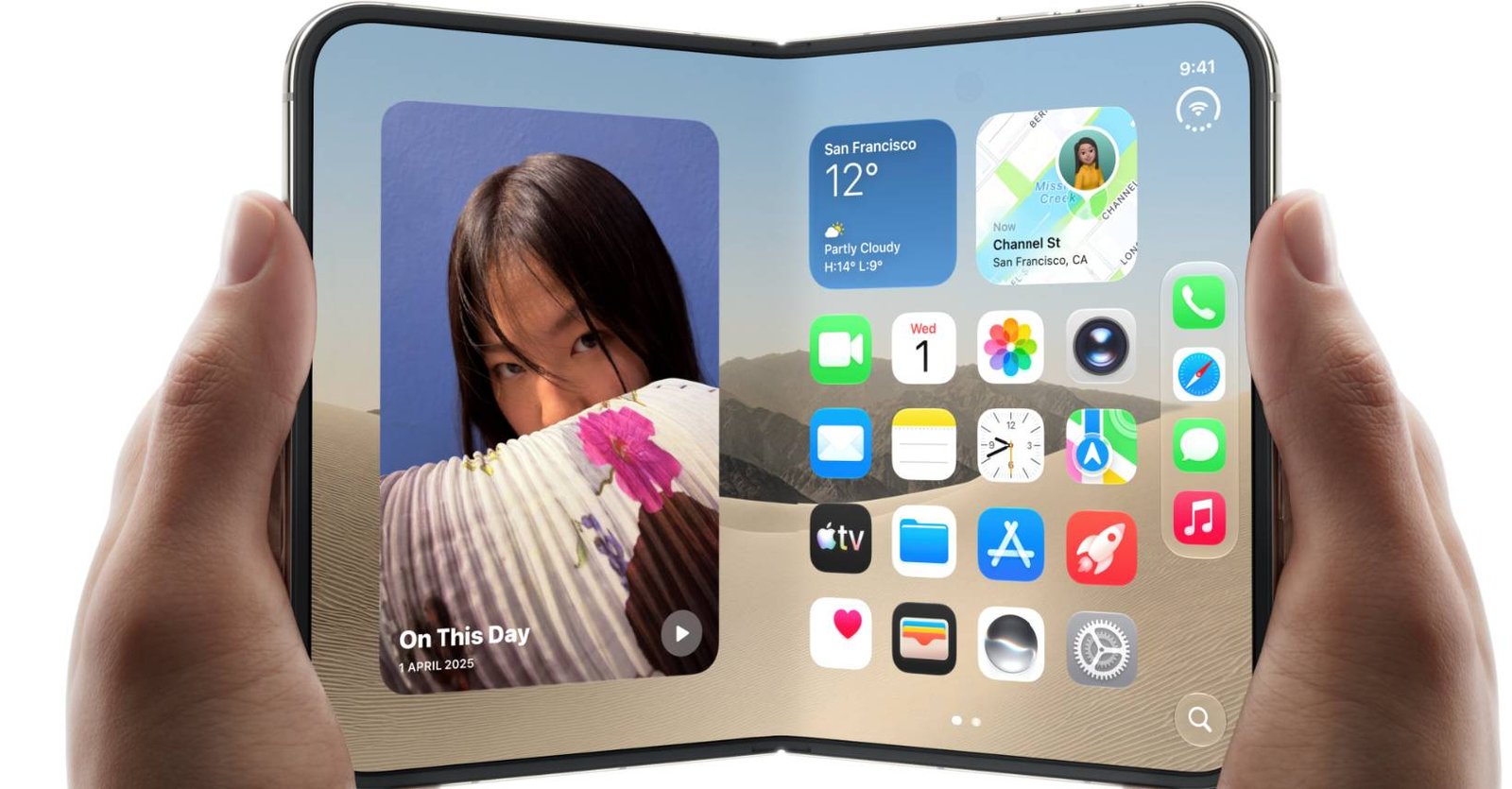
Apple’s first foldable, with a 5.4-inch cover display opening to a 7.6-inch main screen (the largest iPhone display ever), Apple Pencil support, IP68 dust and water resistance, and an inner FaceTime camera that stays invisible until you need it. Australian pricing starts at $3,499 for 256GB, rising to $5,899 for 2TB. Pre-orders open Friday 16 October, with the release on 23 October.
iPhone 18 Pro
Apple’s biggest leap in battery life yet, a new 48MP Fusion Main camera with variable aperture for genuine creative control, the A20 Pro chip with vapour-chamber cooling, a smaller Dynamic Island, and four colours including a new burgundy.
Apple Watch Series 12
An all-new Health Sensing System that Apple claims delivers the most accurate health sensing in any wearable, with more frequent HRV readings for insights on stress and recovery.
Apple Watch Ultra 4
The longest battery life of any Apple Watch, with up to 45 hours of Max Extended Workout tracking.
AirPods 5
Up to 1.5x more Active Noise Cancellation than the previous generation, a new acoustic architecture, and while rare for Apple at a price that’s the same or cheaper than the AirPods 4.
Here’s the verdict from the reviewers
Mark Spoonauer, Tom’s Guide: the software seals it
Tom’s Guide global editor-in-chief Mark Spoonauer, who has reviewed smartphones for more than two decades, came away from his hands-on convinced. “There’s something magical about using the iPhone Duo,” he wrote, praising the seamless transition from phone to tablet and software that responds to the angle of the device. You can’t feel the crease, he noted — though you can see it.
His cons list is just as instructive. The Duo isn’t as thin or light as the Galaxy Z Fold 8 — 5.2mm open versus Samsung’s 4.5mm — and it costs US$100 more than its chief rival. His conclusion: Apple’s years of patience have paid off, but Samsung still holds real advantages on weight and price.
Source: Tom’s Guide — iPhone Duo hands-on
TechRadar: the crease problem, solved the simple way
TechRadar’s hands-on zeroed in on the detail every foldable owner obsesses over. “The crease is gone on the iPhone Duo,” the review declared — not through exotic engineering, but a nano-texture coating on the main display that disperses light across the fold line, giving the big screen a matte finish that’s unheard of in a foldable. The reviewer described the handoff between cover screen and main display – opening Netflix on the small screen, then unfolding to the large one — as flawlessly executed, and was struck that Apple achieved IP68 water and dust resistance in a folding device.
The friction point? One-handed folding proved tricky, and TechRadar cautioned that limited hands-on time means durability remains an open question.
Source: TechRadar — iPhone Duo hands-on
Henry T. Casey, CNN Underscored: possibly the best iPhone yet
CNN Underscored’s Henry T. Casey judged the Duo roughly as good as, if not slightly better than, the latest Samsung foldables at hiding its crease, and found the software experience stood apart from the many Android foldables he’s tested over the years. After hands-on time, he wrote that it could be “one of the best iPhones yet”. High praise for a first-generation product though he was careful to flag his time with the device was limited.
Source: CNN Underscored — iPhone Duo hands-on
The counterpoint: price and first-gen jitters
Not everyone is reaching for their wallet. The Verge’s staff reaction was notably mixed, some praised the form factor and its potential as an iPad Mini replacement, while others focused squarely on the price, durability questions and whether iOS apps will be properly optimised for the folding screen. The iPhone 18 Pro’s US$100 price rise drew similar criticism, though The Verge noted Google and Samsung have also lifted prices on 2026 flagships as component costs climb.
And the seasoned buyer’s rule still applies: plenty of commentators are waiting for the Duo 2, on the time-honoured principle of never buying the first generation of anything.

My take
The reviewers agree on the fundamentals: the hardware is beautiful, the crease fix is genuinely clever, and the software polish is where Apple’s seven-year wait shows. The disagreements are all about value – $3,499 is serious money for a first-generation device, and Samsung’s Fold 8 is thinner, lighter and cheaper.
But having championed the foldable form factor since 2019, I’ll say this: the category was never wrong, it was just early. Apple showing up doesn’t validate the foldable, it mainstreams it. And that’s good news for every woman who’s ever wanted her phone, her tablet and her e-reader in one handbag-friendly device.
Pre-orders for the iPhone Duo open 16 October at apple.com/au.