If you’ve ever stood in a noisy restaurant nodding along to a conversation you can’t actually hear, you already understand the problem GN has spent the last few years quietly trying to solve. Not “make things louder.” Louder was never the issue. The issue was always: louder for who, and what, exactly?
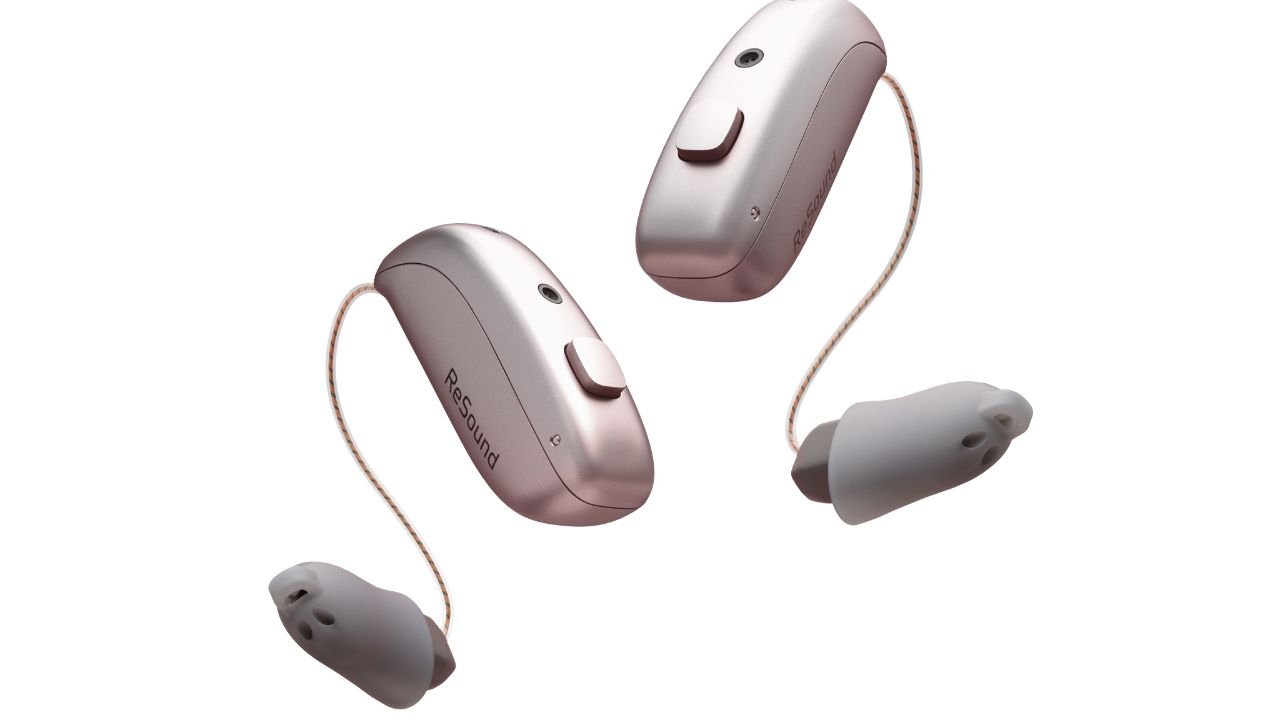
That’s the question sitting at the centre of ReSound Sensia, GN’s new family of hearing aids dropping today (August 10) – in a move that might be the most interesting thing to happen to hearing aids since, well, Bluetooth showed up.
The problem with “smart” noise cancellation
Most modern hearing aids already use AI to cut background noise. The trouble is, they’re not particularly discerning about it. A busy DNN (deep neural network) system might strip out chatter and clatter, sure, but it typically boosts whatever is loudest in the room – not whatever you’re actually trying to listen to. So if the guy at the next table is having a much more animated argument than the friend sitting across from you, guess who wins.
GN’s Hearing division president Peter Justesen put it simply: hearing aids that lean on noise reduction alone tend to amplify the loudest voice in a room, “even though it is often not the one the user is trying to follow.” ReSound Sensia is built to fix that. Not by getting louder, but by getting more accurate about intent.
GN has a story it likes to tell about exactly this problem. One of its trial participants, an older woman with hearing aids from another premium brand, described arriving at a busy airport to be met by her granddaughter. At the same moment, a group of football players walked into the arrivals hall, chatting loudly off to the side. Her hearing aids – doing exactly what they were designed to do – locked onto the louder football players instead of her granddaughter standing right in front of her, eager to tell her something. It’s a small story, but it captures the whole problem: “loudest” and “most important” are very rarely the same thing.
It also tracks with what hearing aid users say is actually bothering them day to day. In a two-week diary study, 91% of hearing aid wearers reported being annoyed by sounds in their environment – and the single most common culprit wasn’t traffic or appliances or construction noise. It was other people talking.
Meet AcoustIQ, the bit doing all the thinking
The engine behind Sensia is something GN calls Intelligent All-Around, powered by a new onboard AI platform. At the centre of it sits AcoustIQ, a real-time sound classifier that reads the room – literally – and decides which of the hearing aid’s tools to switch on and when.
Think of it less like a single feature and more like a conductor. AcoustIQ is constantly figuring out: are we in a quiet cafe, a packed train platform, a windy street? And based on that, it brings in a 4-microphone directional beamformer (which focuses in on whatever’s directly in front of you) alongside a new DNN denoising system, tuned to lift the voice you’re facing rather than whichever one is shouting the loudest.
GN says this classification happens with 88% greater accuracy than the closest premium competitor, and testing at Germany’s Horzentrum Oldenburg found the combination genuinely improves audibility of an intended speaker, rather than just cranking overall volume. Translation: instead of hearing everything, you hear who you’re looking at. Which, if you’ve ever tried to lip-read your way through a wine bar, is a genuinely big deal.
And it doesn’t murder the battery to do it
Here’s the part that tends to get lost in the tech talk: none of this costs you battery life. GN says the rechargeable microRIE and ITC/ITE styles still get a full 24 hours, even with the denoising running automatically in the background rather than something you have to remember to switch on. GN is pitching the efficiency gain at 17 times better than other AI-powered hearing solutions – which, if accurate, quietly solves the actual daily friction most hearing aid users deal with: not the sound quality, but the babysitting.
A bigger deal for bimodal users
Alongside the core Sensia lineup, GN is also launching ReSound Sensia Bimodal and ReSound Enzo IA Bimodal, designed specifically to work alongside Cochlear Nucleus sound processors. For anyone using a hearing aid on one ear and a cochlear implant on the other, getting the two systems to actually talk to each other – reliably, without weird connectivity drop-outs – has historically been its own headache. This is GN’s latest step in its ongoing partnership with Cochlear through the Smart Hearing Alliance, aimed at making that bimodal experience feel less like two devices coexisting and more like one system working together.
The clinic side gets an upgrade too
GN isn’t just upgrading the hardware. It is also rolling out ReSound Smart Fit 2.4, an update to the fitting software audiologists use during consultations. The software uses the new NAL-NL3 prescriptive standard – currently considered the gold standard for personalised hearing aid fittings – alongside GN’s own Audiogram+ tool to create more tailored hearing experiences. The pitch here is less flashy but genuinely practical: a simpler, faster interface means less time audiologists spend clicking through menus, and more time actually talking to the person in the chair.
When can you actually get one
ReSound Sensia (and its Beltone Illuminate equivalent) rolls out in the US, Canada, Germany and Austria from August 20, with more markets following in the months after. It’ll be available across microRIE and RIE styles, plus custom CIC, ITC and rechargeable ITC/ITE options – so there’s some flexibility depending on how visible or invisible you want your hearing aid to actually be.
Why this feels like more than a spec bump
Hearing aid marketing loves to talk about “AI” the same way skin care loves to talk about “science” – a lot of vague, confident language that doesn’t always translate to something you’d notice in real life. What’s different about Sensia is the specificity of the problem it’s targeting: not “reduce noise,” but “figure out who you’re trying to listen to, and get out of the way.” That’s a much harder engineering problem, and if the independent testing holds up in the real world the way it did in the lab, it’s the kind of upgrade that shows up in ordinary moments – a dinner table, a school pickup, a crowded platform – rather than a spec sheet.