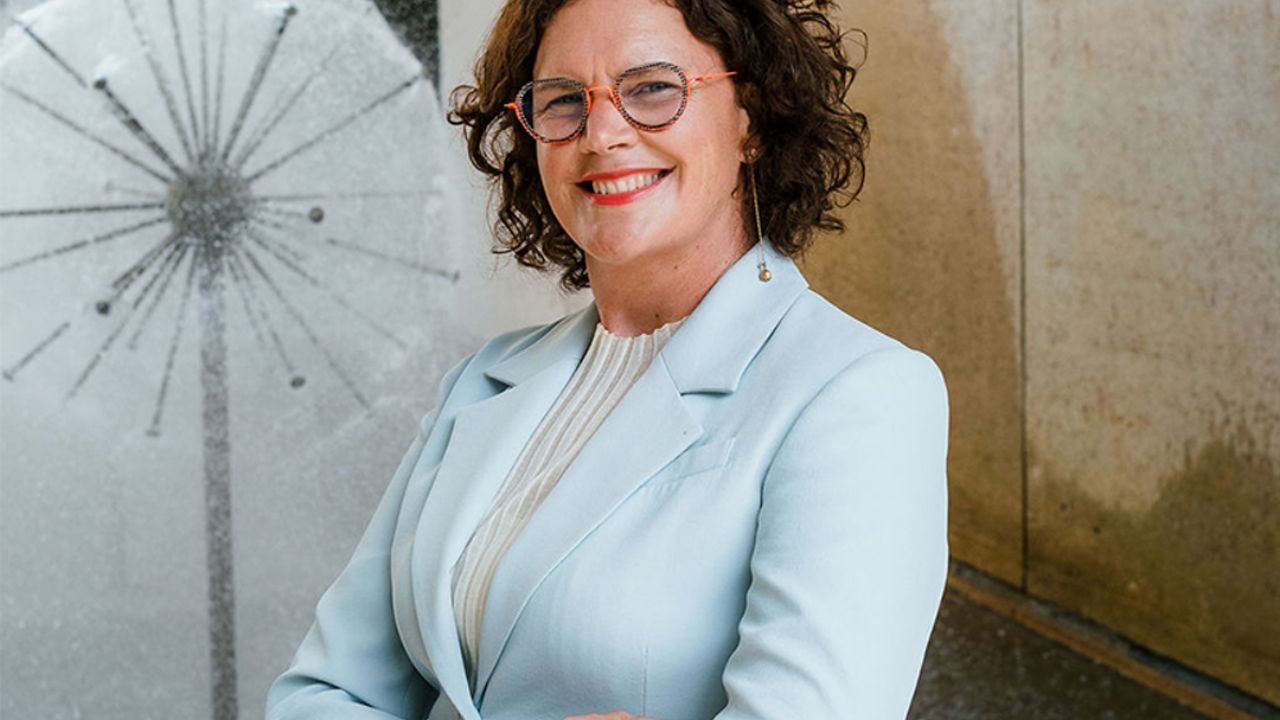
Professor Cori Stewart FTSE has spent her career turning ideas into things that actually work. And actually matter. As Founder and CEO of ARM (Advanced Robotics for Manufacturing) Hub, she has helped Australian manufacturers modernise, compete globally, and, at one particularly critical moment, help keep the country running. Now that body of work has earned her one of Australia’s most prestigious honours: the 2026 Churchill Fellowship.
The Winston Churchill Trust selected Stewart as one of just 75 Australians this year to join its national network of changemakers, recognising her proven ability to solve real problems and deliver real outcomes. For women watching the tech industry and wondering what leadership can look like, Stewart is a powerful example: no fanfare, just results.
“It Doesn’t Matter What Your Status Or Background Is”
Stewart’s own words explain why this recognition means so much to her.
“What I love about the Winston Churchill Trust is their purpose,” she says. “The fellowships support people who have proven, time and again, that they can uniquely solve a problem and make a real difference. It doesn’t matter what your status or background is. What matters is your ability to do something tangible in the world.”
Coming from a woman who has built a national organisation from scratch, in a field still dominated by men, that statement carries weight. Stewart didn’t wait for an invitation into the manufacturing and robotics sector – she built her own seat at the table, then opened the door for others.
A Mission Born in Crisis
Stewart’s fellowship project will take her across the globe to investigate how smarter, more intelligent robotics can make Australian manufacturing more competitive internationally. But the roots of this work run deeper than any single research trip.
They trace back to one of the most urgent moments of recent Australian history.
During the pandemic, Stewart worked directly with Australian manufacturers to rapidly develop a medical respirator – a project born out of necessity, when global supply chains buckled and the country needed to look inward for solutions.
“This notion became especially real during the pandemic,” Stewart reflects. “Since then, I have continued to see how manufacturing capability matters in moments of crisis, whether it’s responding to disrupted supply chains and supporting medical needs or creating secure, high-value jobs across Australia’s regions.”
That experience has stayed with her. She believes new technology should strengthen Australian industries and communities, not create dependence on the rest of the world, and she’s built her career around proving that point.
Chasing Sovereign Capability, One Robot at a Time
As part of her Churchill Fellowship, Stewart will travel to multiple countries at the forefront of building and deploying intelligent robotics. Her goal is to identify technologies and approaches that can be brought home to strengthen Australia’s own manufacturing capability, so the next crisis doesn’t catch the country flat-footed.
A Career Built on Bridging Ideas and Industry
Stewart was already one of Australia’s most influential voices in science and technology commercialisation before this Fellowship. Through ARM Hub, the national not-for-profit she founded and now leads, she has helped countless companies modernise and commercialise using advanced technology.
Her influence reaches well beyond ARM Hub. Stewart sits on the boards of Industry Innovation and Science Australia and the Queensland Manufacturing Institute, and her contributions to STEM have earned her recognition as a Superstar of STEM and winner of the Asia Pacific Women in AI Award.
A Legacy Still Being Written
Stewart’s story is a reminder of what women are already achieving at the highest levels of Australian tech and manufacturing – not as an exception, but as leaders setting the pace. She built a national organisation from the ground up, stepped into a crisis when the country needed manufacturing solutions fast, and has spent her career championing the idea that Australia can build its own future rather than import it.
Her Churchill Fellowship is the next chapter in that story, and a well-earned one.