There are certain products that dominate a category so completely (See: Simpson’s episode where Lisa becomes obsessed with “Mapple”) that we stop looking anywhere else. Tablets are one of them.
Mention buying a tablet, and most people will instinctively reach for an Apple iPad or a Samsung Galaxy Tab. No shade. Both are excellent devices, both deserve their reputations, and both have spent years convincing us they are the default choice.
But every now and then, a product arrives that quietly taps you on the shoulder and says, “Excuse me, but have you actually looked at what you’re getting for your money over here?”
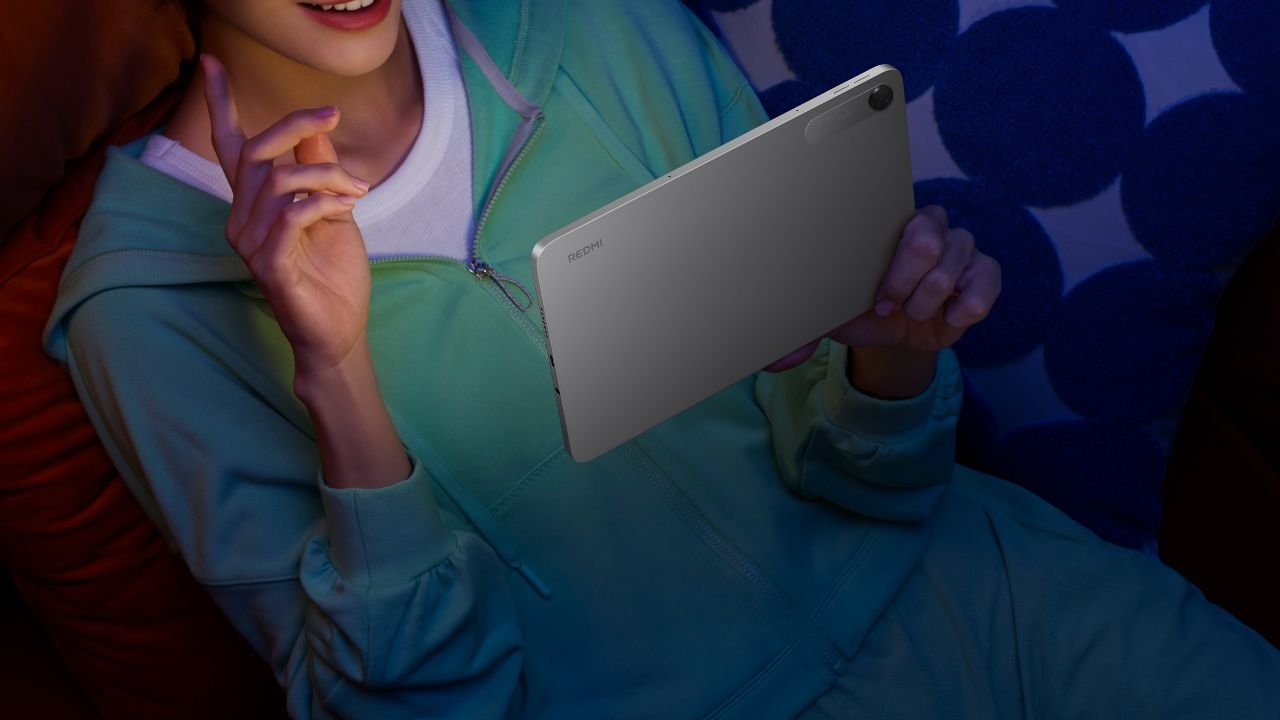
Enter the Xiaomi REDMI Pad 2.
Retailing in Australia for $299 (64GB) and $349 (128GB) this sleek little slab of aluminium has no business being as impressive as it is. Yet after spending time with it, I kept finding myself asking the same question: if someone handed me $299 and told me to buy a tablet for everyday entertainment, reading, streaming and casual productivity, would I automatically spend hundreds more on a bigger-name competitor?
I’m not so sure anymore.

The first surprise comes before you’ve even switched it on.
At just 7.4mm thin, the REDMI Pad 2 feels remarkably premium in the hand. The aluminium alloy body gives it a sturdiness that many budget devices lack, while the slim profile makes it easy to hold during lengthy Netflix binges or accidental three-hour TikTok scrolling sessions that definitely weren’t meant to happen.
Visually, it punches well above its weight.
The 9.7-inch 2K display is crisp, colourful and sharp enough that I quickly forgot I was using a tablet that costs less than many flagship smartphones’ monthly repayments. Whether I was streaming video, reading articles or flicking through photos, content looked vibrant without appearing overly saturated.
The real star, however, is the 120Hz refresh rate.
If you’ve never used a high-refresh-rate display before, it can sound like one of those tech specifications designed purely to impress people on Reddit. In reality, it’s one of those features that becomes surprisingly difficult to give up once you’ve experienced it. Scrolling feels smoother, animations look cleaner and the entire interface feels more responsive. It’s a premium feature that is still often reserved for more expensive devices, making its inclusion here feel particularly generous.
The screen also reaches up to 600 nits of brightness, which proved useful when I inevitably carried it outside to test whether I could answer emails while pretending to enjoy fresh air. While direct Australian sunlight remains undefeated, the display held up far better outdoors than I expected at this price point.
Performance is another area where the REDMI Pad 2 avoids the common budget-tablet trap.
Powered by Qualcomm’s Snapdragon 6s 4G Gen 2 processor, the device handled daily tasks with ease. Streaming, web browsing, social media, note-taking and jumping between apps all felt smooth and reliable. No, this isn’t a device designed to replace a high-end laptop or satisfy someone editing Hollywood blockbusters from a beachside cafe. But for the overwhelming majority of people using a tablet for entertainment, study, light work and general life admin, it’s more than capable.
What impressed me most was how little I found myself thinking about performance at all.
That’s often the sign of good technology. It simply gets out of your way.
Battery life follows a similar story.
The 7600mAh battery is substantial enough that I rarely felt concerned about reaching for a charger. Streaming sessions, reading marathons and general daily use barely seemed to faze it. While battery longevity always depends on how heavily you’re using a device, the REDMI Pad 2 comfortably delivers the sort of all-day endurance most users actually need.
Software-wise, the tablet runs Xiaomi HyperOS 3, which offers a clean, modern experience with useful connectivity features designed to work across the broader Xiaomi ecosystem. Even if you’re not already invested in Xiaomi products, navigation feels intuitive and responsive, while the system makes good use of the tablet’s hardware.
Perhaps the most compelling thing about the REDMI Pad 2 isn’t any individual specification.
It’s the overall package.
For years, budget tablets often came with an unspoken compromise: accept a sluggish processor, a mediocre screen or questionable build quality in exchange for saving money. The REDMI Pad 2 feels like it’s operating from a different playbook. Instead of feeling like a cheaper version of something better, it feels like a genuinely well-rounded tablet that simply happens to cost less.
That’s what makes it such an interesting alternative to the established players.
Not because it beats the iPad or Galaxy Tab at everything. It doesn’t need to. Rather, it challenges the assumption that most users require a premium-priced tablet in the first place.
If you’re a creative professional, a power user or someone deeply embedded in a particular ecosystem, you may still gravitate towards Apple or Samsung. But if you’re looking for an affordable tablet that delivers a premium design, a gorgeous display, smooth performance and impressive battery life without causing your bank account emotional distress, the REDMI Pad 2 deserves a spot on your shortlist.
At $299, it may well be one of the most underrated tablet launches of the year.