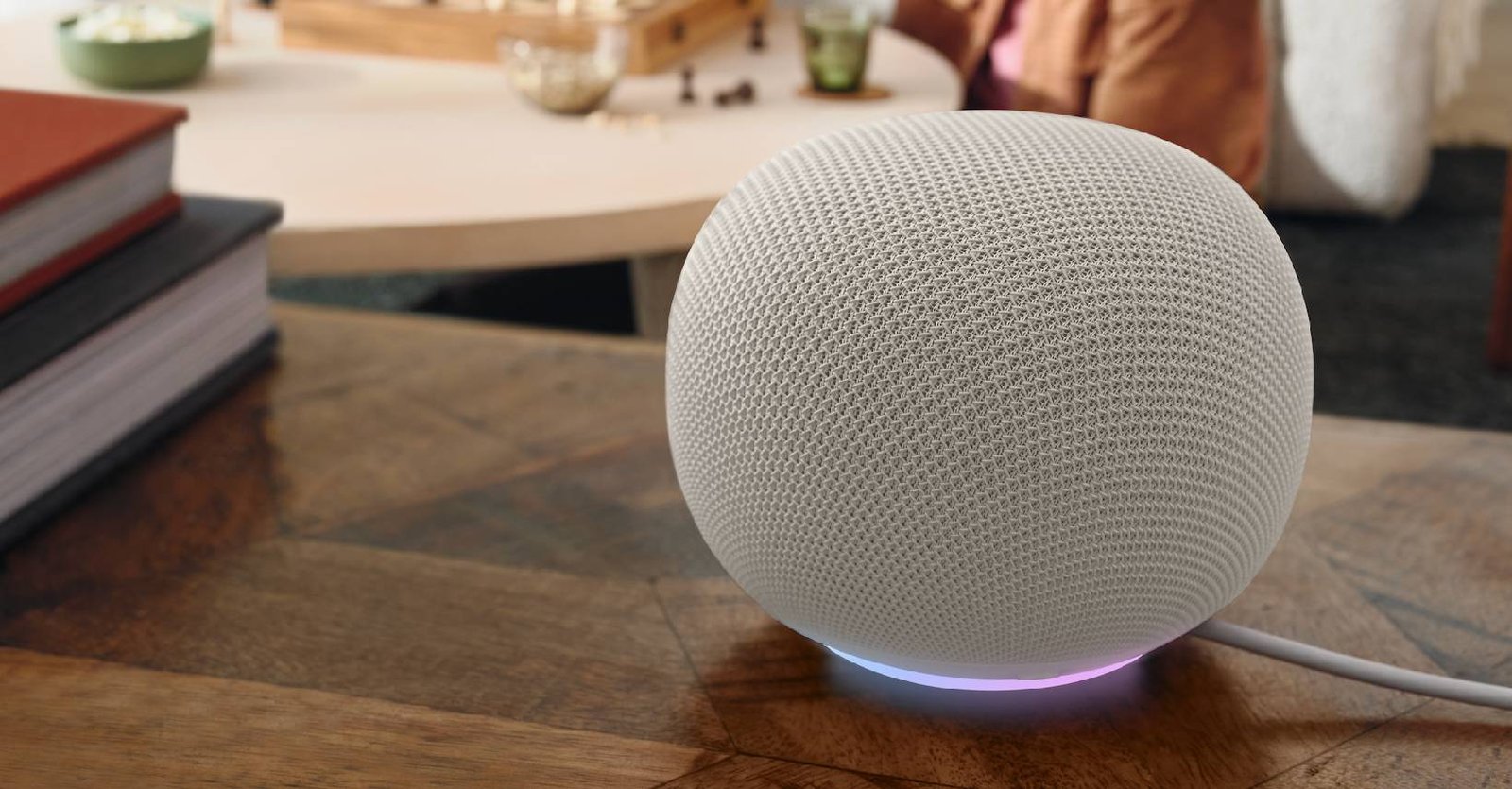
It starts in the kitchen. By mid-morning it’s in my office. By evening, it’s perched on the bedside table, playing something mellow while I wind down. That’s the flexible side of the Google Home Speaker. It’s small enough to pick up and carry anywhere, so it simply goes where I go.
Google’s new Home Speaker ($199, available at the Google Store, JB Hi-Fi and Harvey Norman in Hazel and Porcelain) is the first audio device built for Gemini, and it marks a real shift in how we talk to our homes. Gone are the days of memorising rigid command phrases. Now it’s a genuine two-way conversation. It’s possible to ask complex layered questions and get useful and even expressive responses which actually shows an understanding of what you mean.
Small, Sleek And Wonderfully Portable
Wrapped in a custom 3D-knit textile and sustainably built, this is a speaker designed to be seen, not hidden. Its compact, rounded shape slips onto a bookshelf, a bench top or a windowsill without a second thought because it’s smart looking. Unlike a bulky sound system anchored to one room, you can relocate it around the house in seconds. I really love that.
The 360° balanced sound is engineered to fill whatever space you put it in, whether that’s a podcast in the kitchen or an album in the living room. The volume when it is on at its highest level is not super loud but its still sufficient. And here’s a clever trick: pair two speakers with your Google TV Streamer and you’ve transformed your lounge room into a mini home theatre with spatial surround sound. It also works beautifully as back-up sound. I found when my TV audio wasn’t quite cutting it, or when I wanted music playing in the next room, the speaker steps in seamlessly.
Your Pocket Concierge: What It Can Actually Tell You
This is where the Home Speaker earns its keep. Ask it for:
- Weather and traffic before you leave the house
- Your calendar and reminders — synced straight from your Google account
- Timers and alarms while cooking (hands covered in flour? No problem)
- News briefings from your favourite sources
- Recipes and conversions read out step by step
- Translations on the fly
- Smart home control — lights, thermostats, cameras and more
- General knowledge — and with Gemini, you can ask follow-up questions and it keeps up with the thread

The Foldable Phone Factor
Here’s where the Google ecosystem really sings. I use last year’s Google foldable, the Pixel 10 Pro Fold, and the interconnectivity between phone, Gemini and the speaker is seamless. Music casting, smart home controls, calendar queries … basically everything flows between devices and AI without a hiccup.
If you’re already with Google and use Gmail like me, there are no sign-in dramas. No new accounts, no password resets, no fiddly pairing rituals. Your Google account carries you through and the speaker knows your calendar, your preferences and your routines from the moment you set it up.
How Home Speakers Became Part Of The Furniture
Cast your mind back a decade, and the idea of chatting to a speaker in your kitchen felt like science fiction. Today, it’s as ordinary as the kettle. Home speakers crept into our lives first as something of a novelty. You’d have fund saying “play me a song”, “set a timer” but it didnt take long before they became genuinely indispensable. They’re the morning news reader while we make coffee, the sous-chef reading out recipes, the DJ at dinner parties, the gentle voice that dims the lights at bedtime.
They’ve changed family life, too. Kids ask them homework questions, grandparents use them for hands-free calls, and busy households run on their shared shopping lists and reminders. What started as a gadget has become part of the rhythm of the home and with Gemini now powering natural conversation, the speaker has graduated from taking orders to actually helping. The next era of connected living isn’t coming. It’s already sitting on your bench top.
Verdict: Small enough to move, smart enough to matter, and stylish enough to leave out on display. The Google Home Speaker is the easiest $199 upgrade to your home this year especially if you’re already living in the Google ecosystem.